The work behind the work
Butterfly Matrix
by Helen She
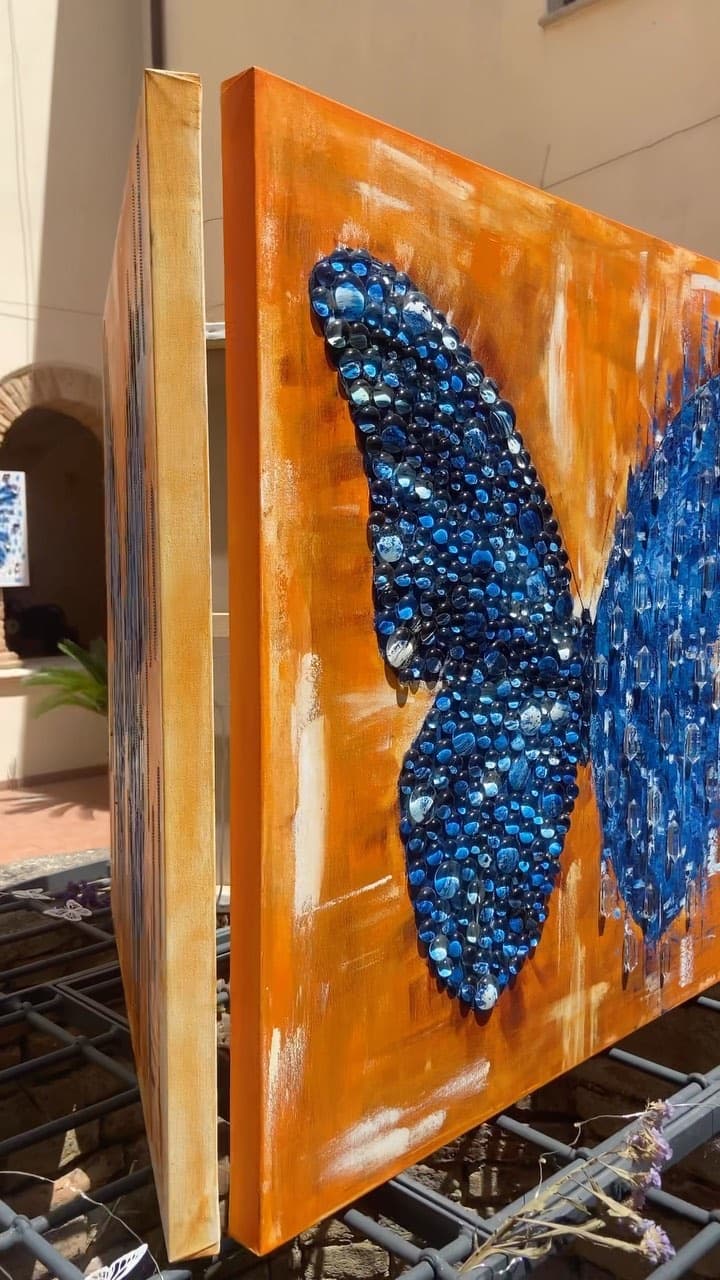
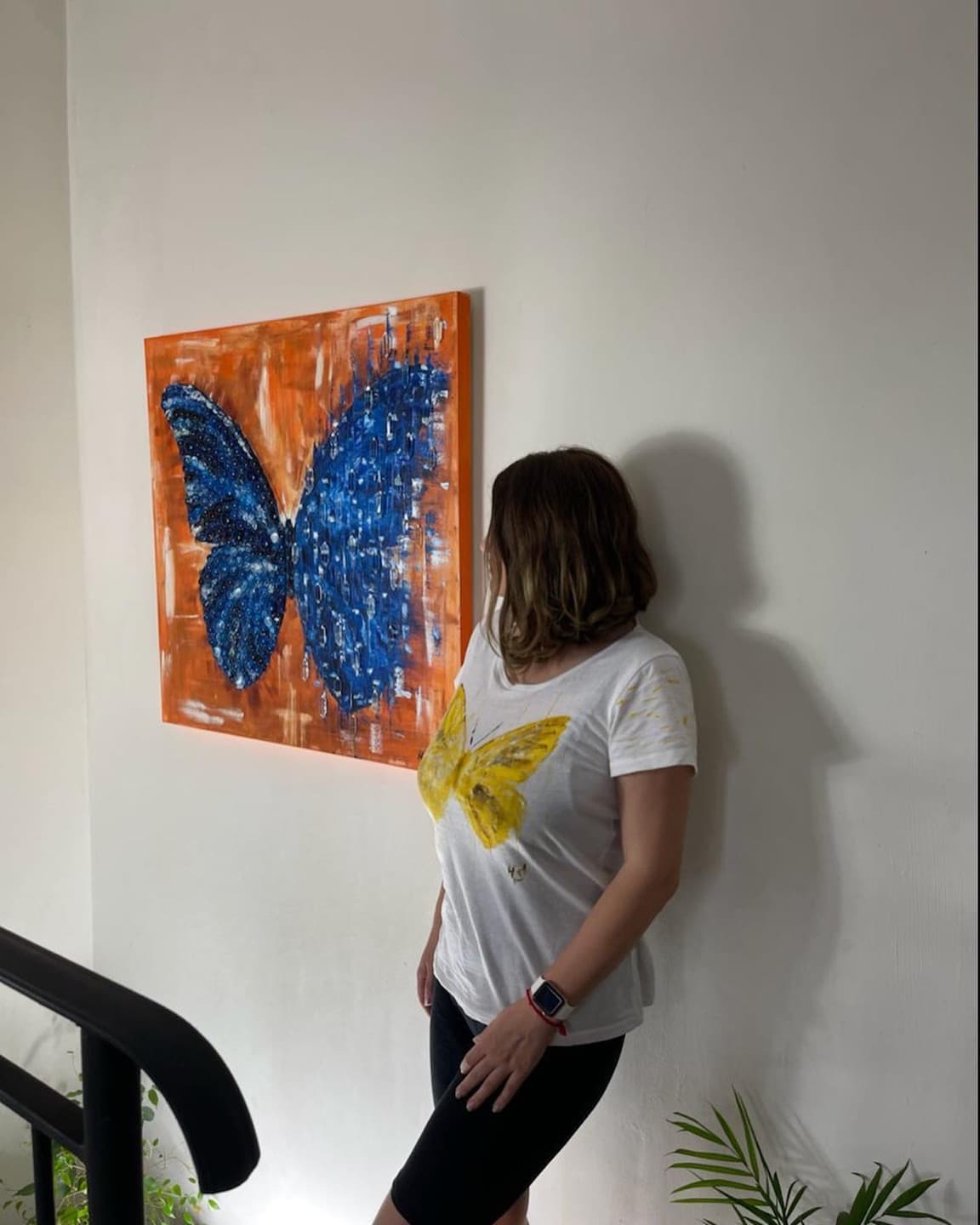
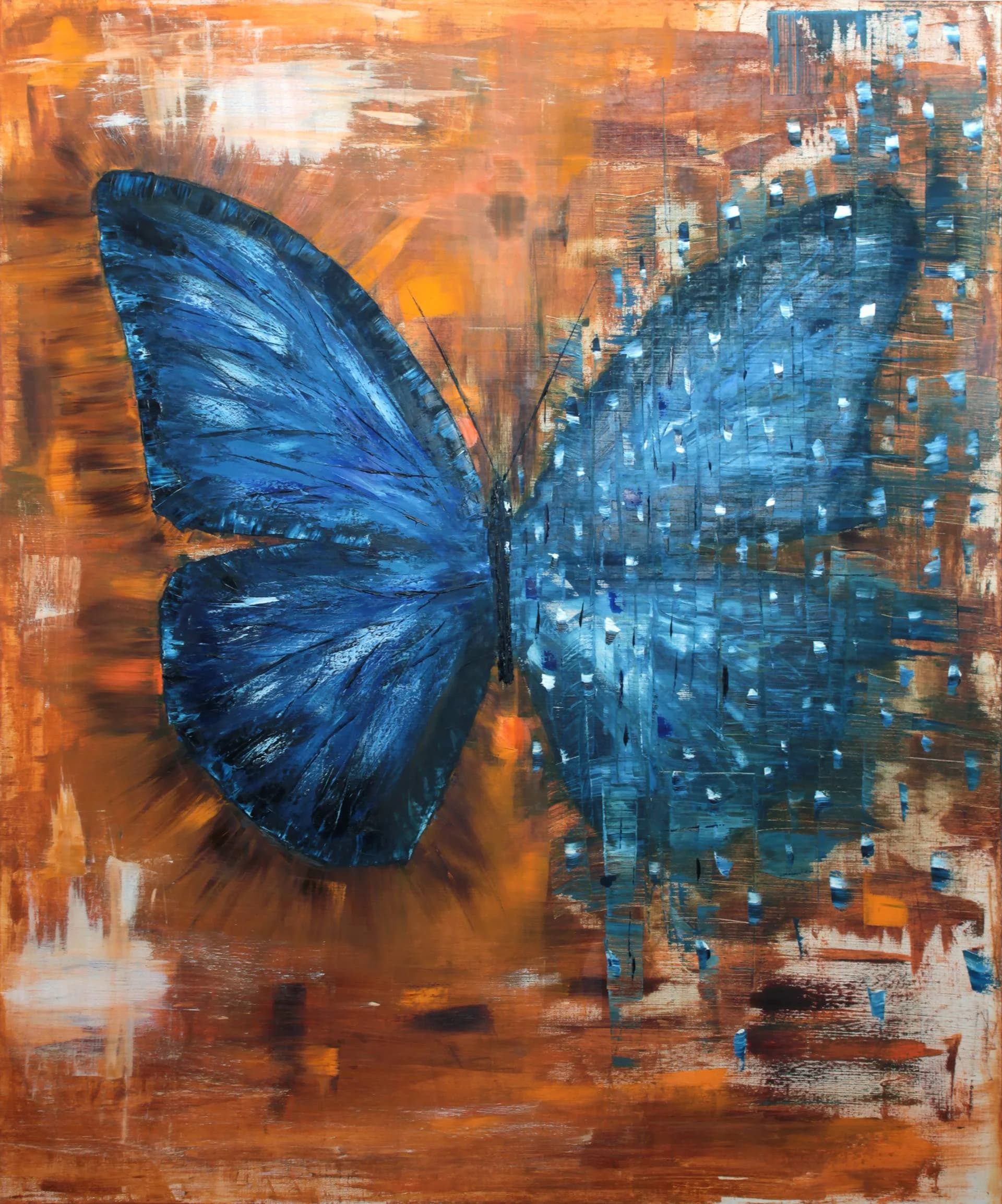
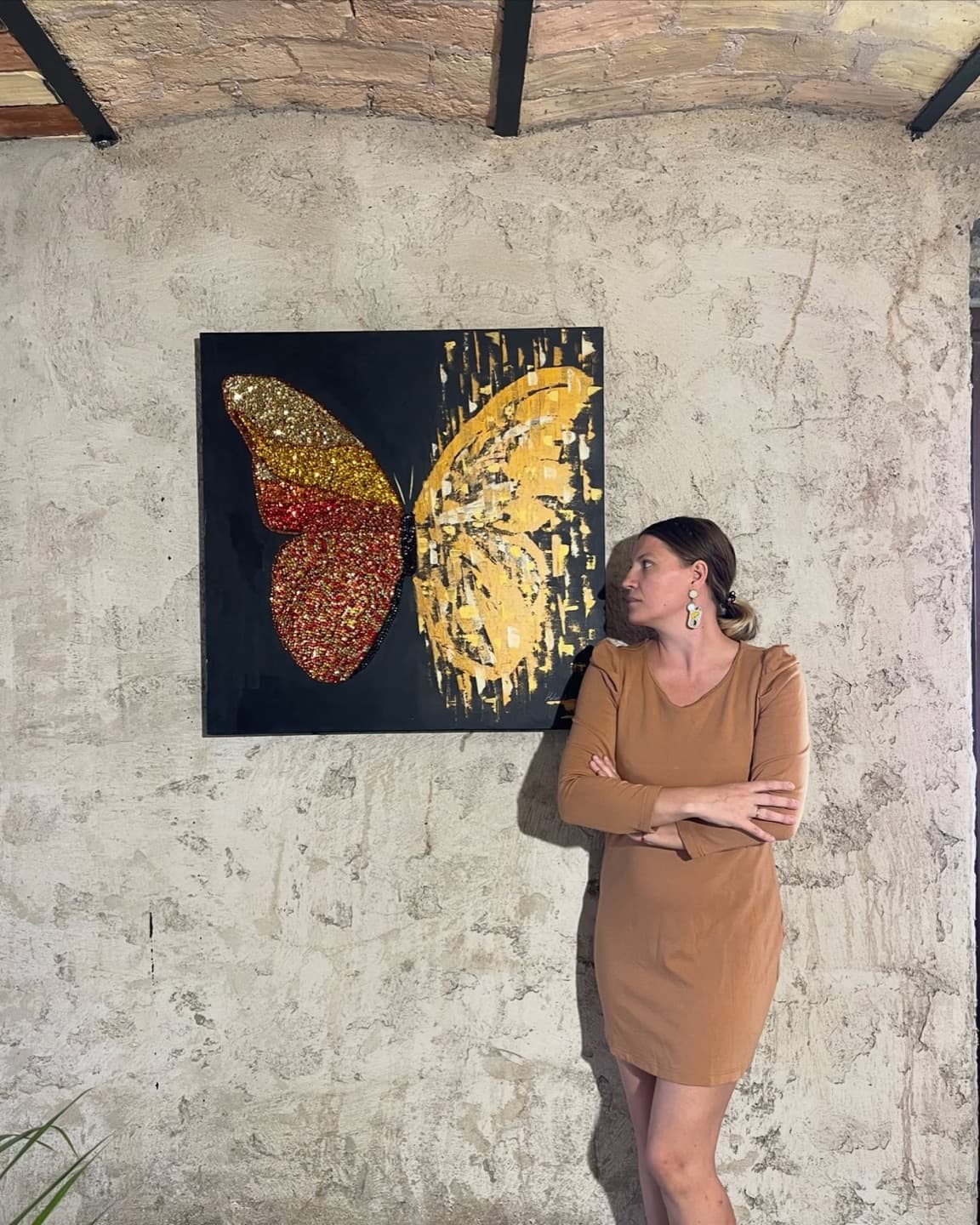
An ongoing series of around forty works in which the living form of a butterfly meets the grid of “the matrix”. This page follows one of them — Butterfly Matrix Cristal (2022) — from the painted canvas to the last hand-cast drop, and places it within the series.
The work
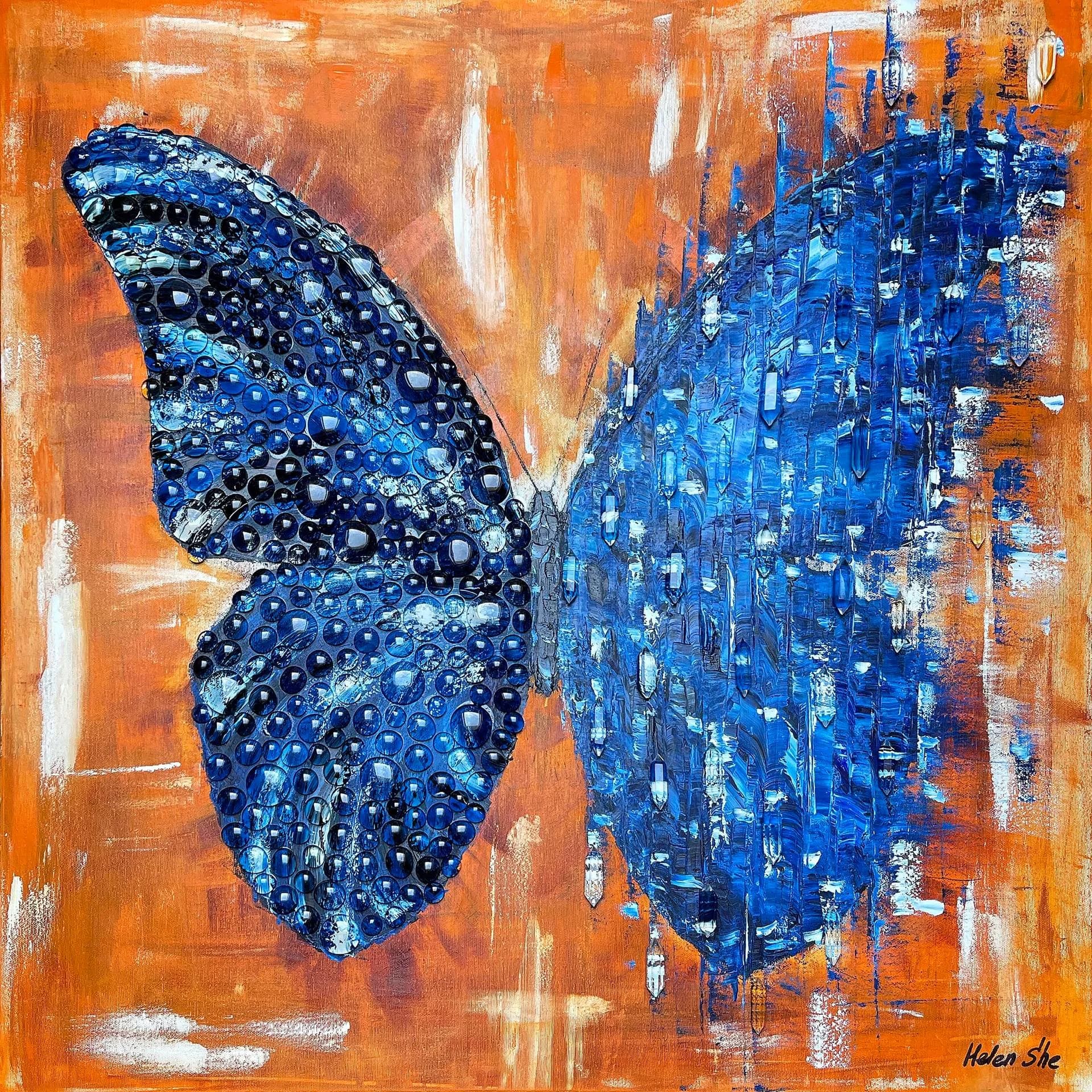
Butterfly Matrix Cristal
- Title
- Butterfly Matrix Cristal
- Year
- 2022
- Medium
- Oil on canvas with hand-cast epoxy-resin drops and crystals
- Dimensions
- 80 × 80 cm
- Artist
- Helen She
- Technical collaboration
- Boris Shestakov — silicone molds and casting
- Materials
- Oil paint, epoxy resin
- Tools
- Brushes and palette knife; silicone molds made by the artists; tweezers for placing the drops; hand polishing
- Time to make
- About three months
- AI
- None — painted, cast, polished and placed by hand
The story
Dew on one wing, crystal on the other
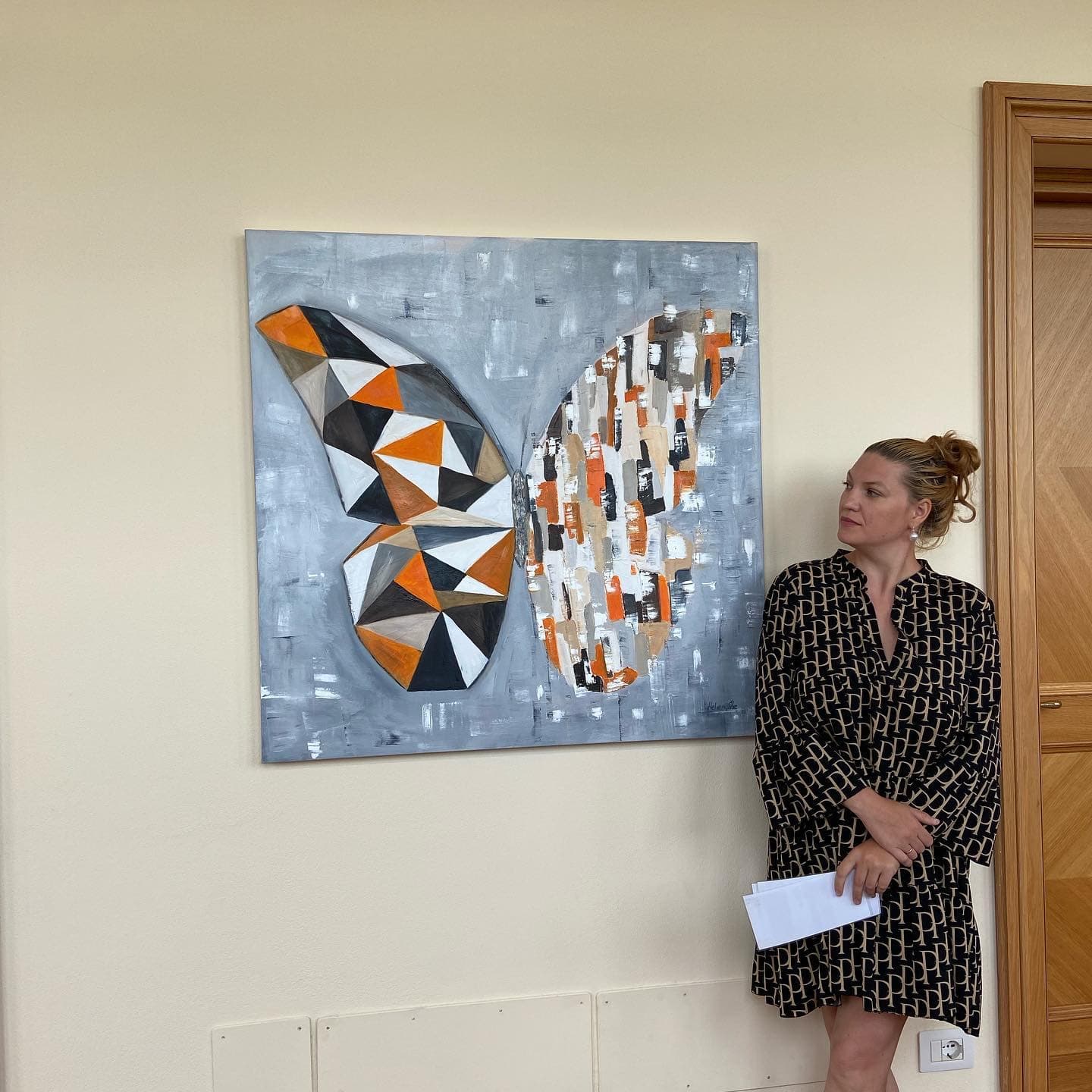
Butterflies have been one of my recurring subjects for years. To me they are the clearest image of transformation, and in my Butterfly Matrix series a butterfly lives in two worlds at once: one wing belongs to nature, the other to “the matrix”, the same form rebuilt as structure and light.
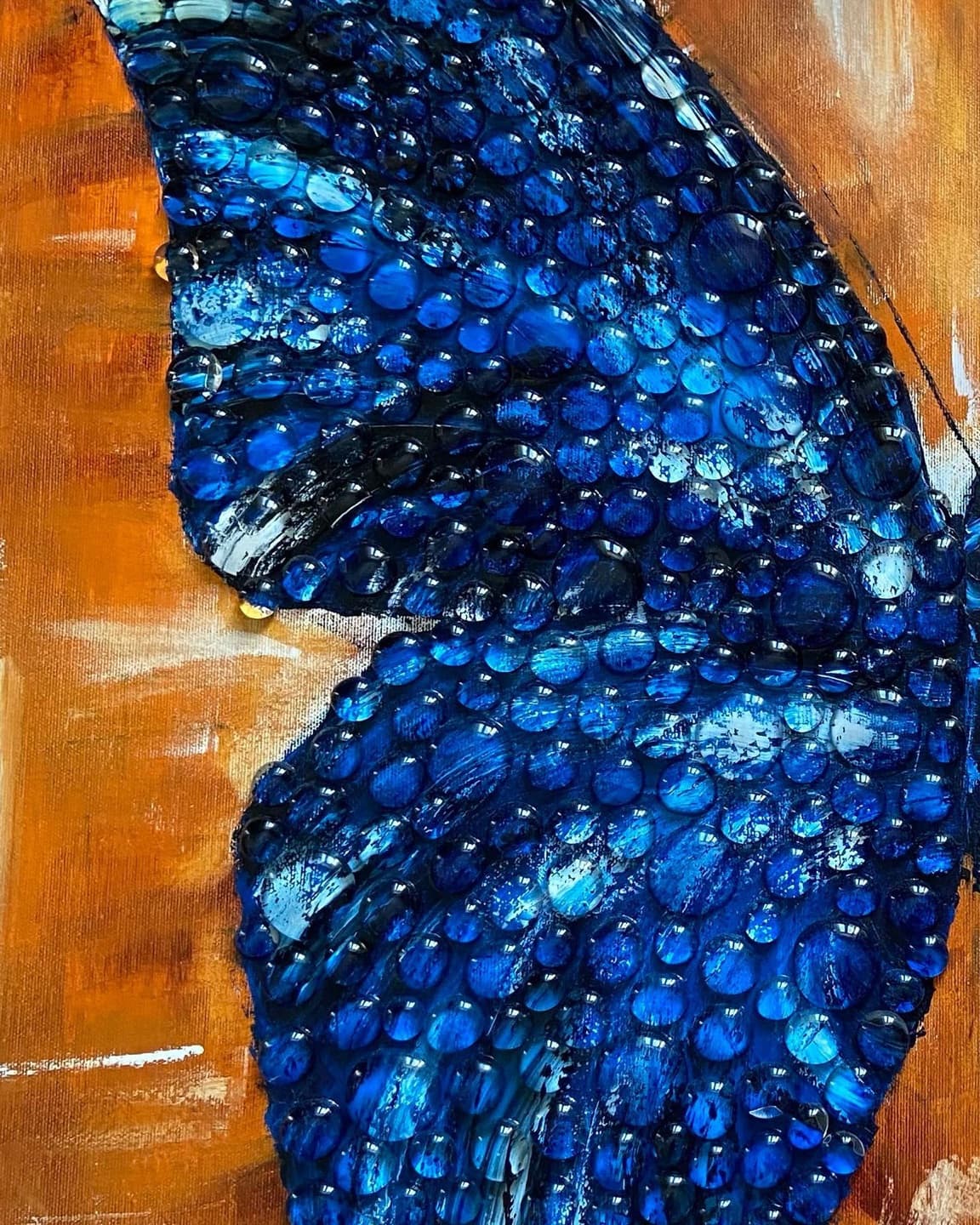
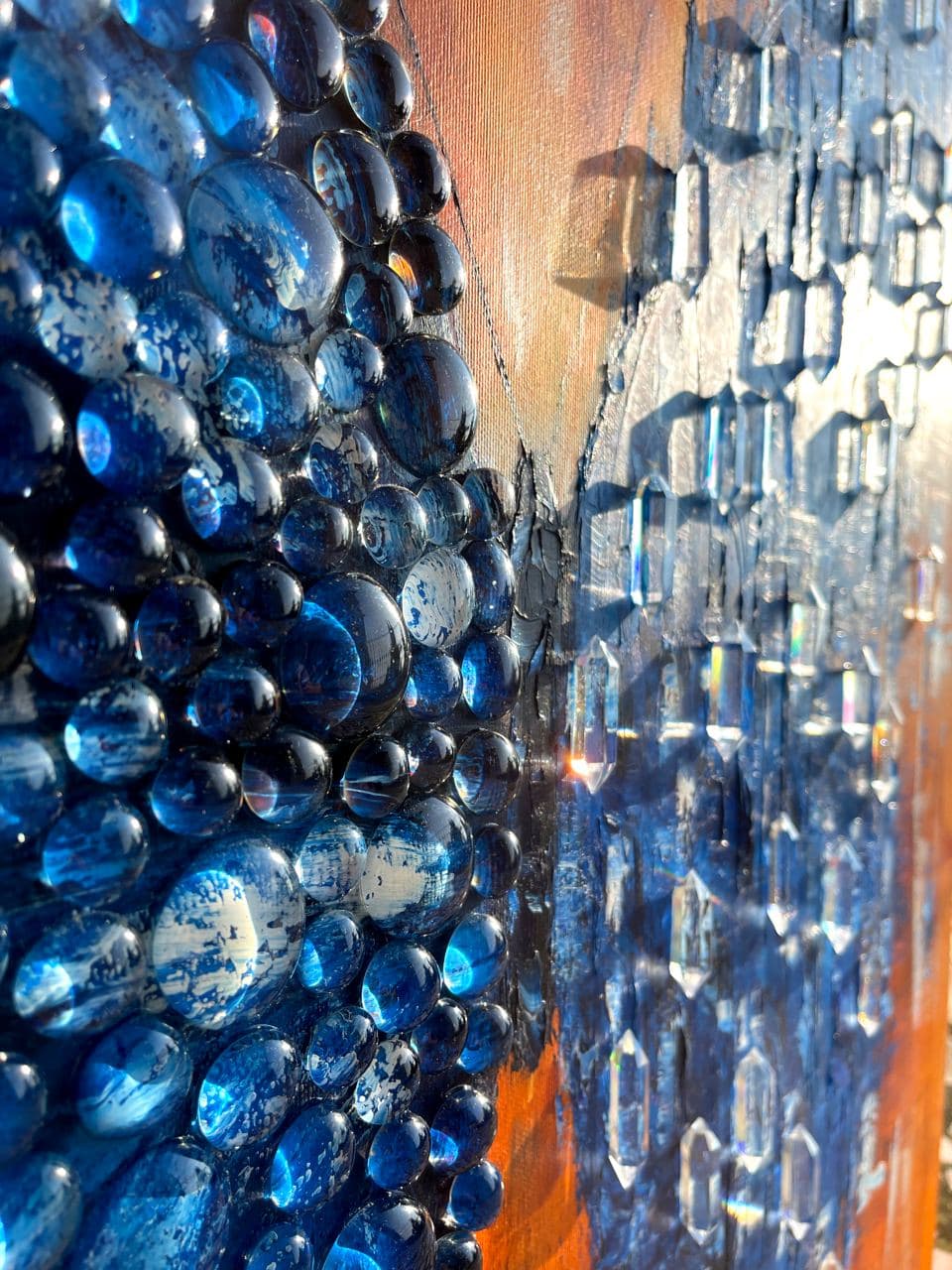
Cristal began with an ordinary morning. If you look at a butterfly early in the day, its wings are covered in tiny drops of dew, each one catching the light in its own way. Nature does this effortlessly. I wanted to find out what it takes to do it by hand.
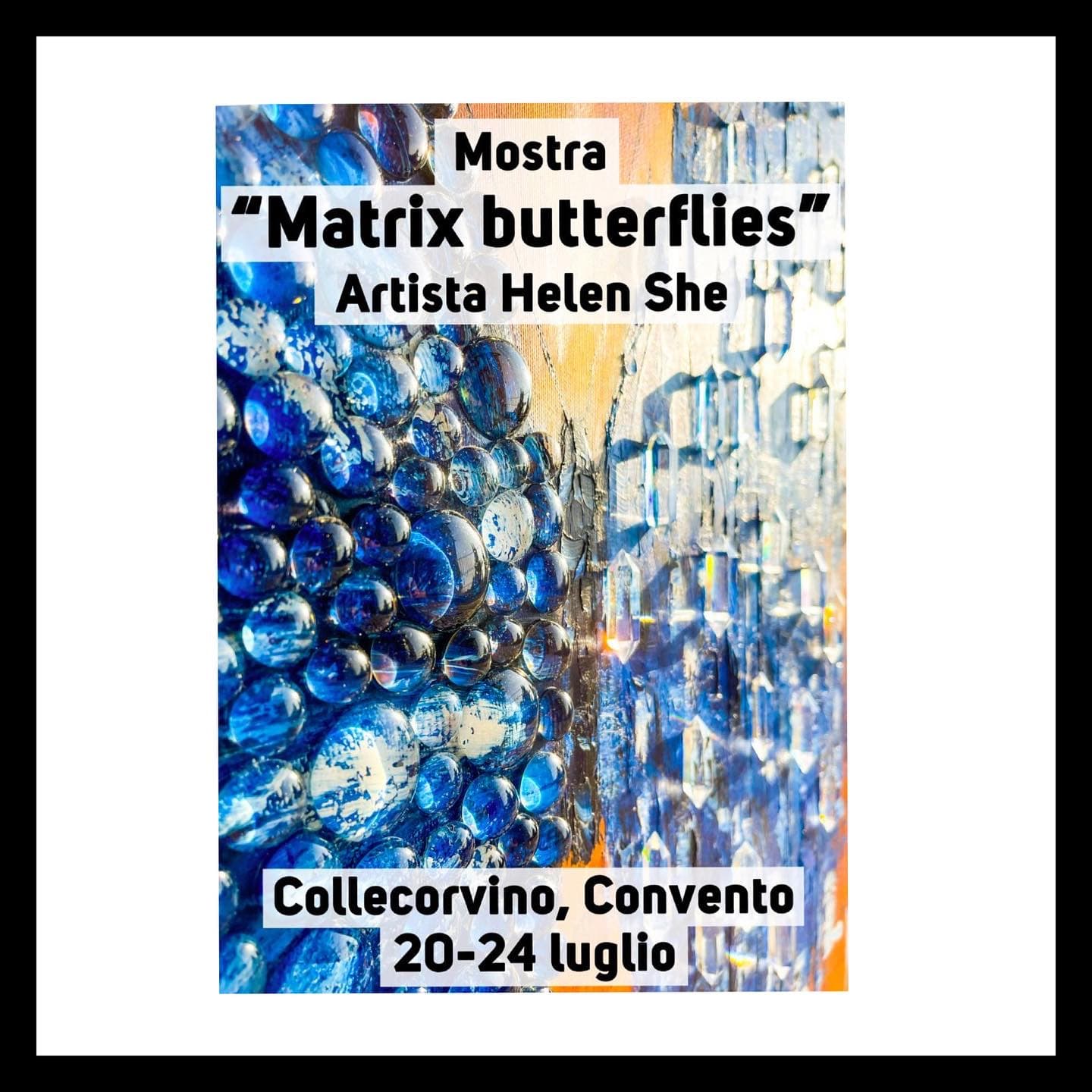
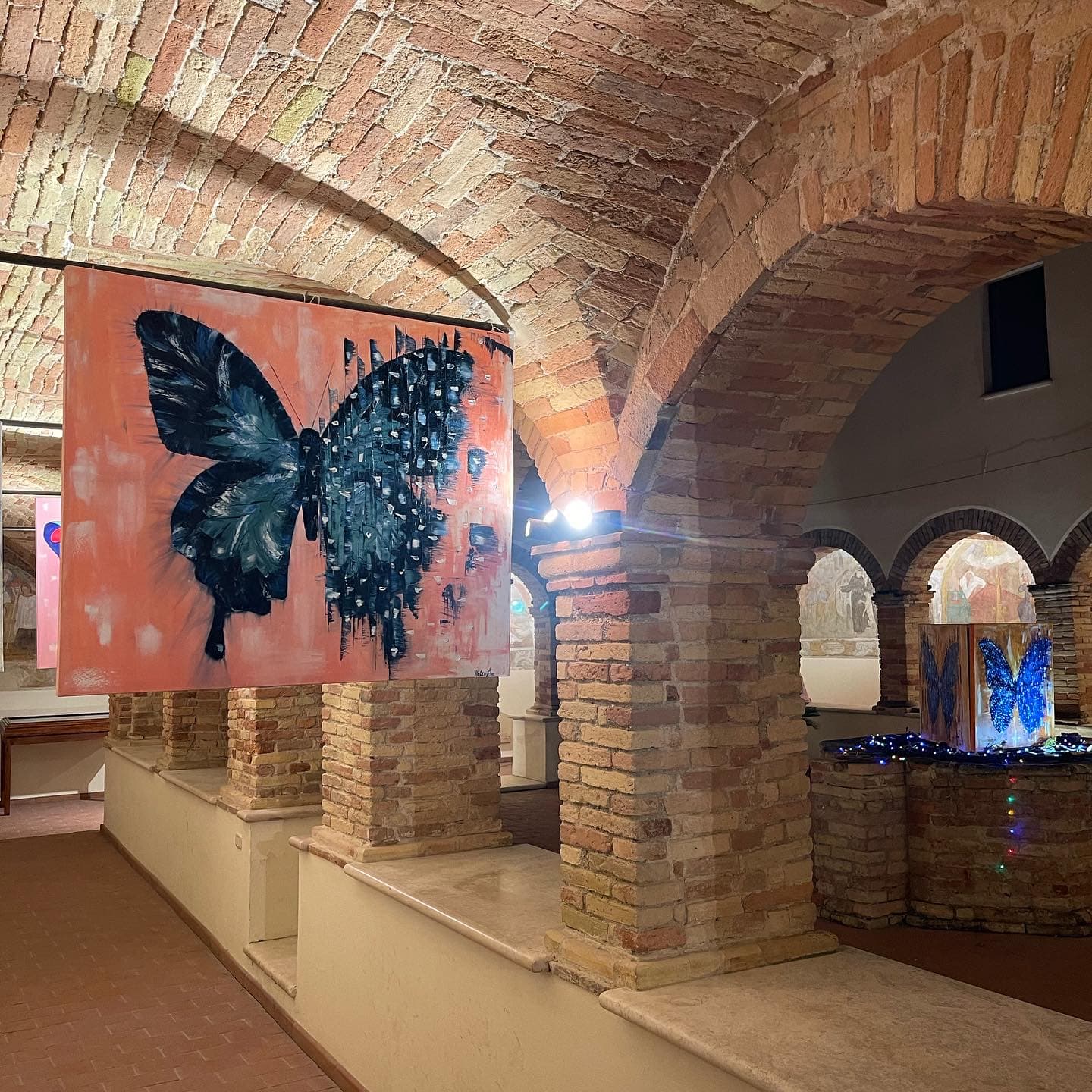
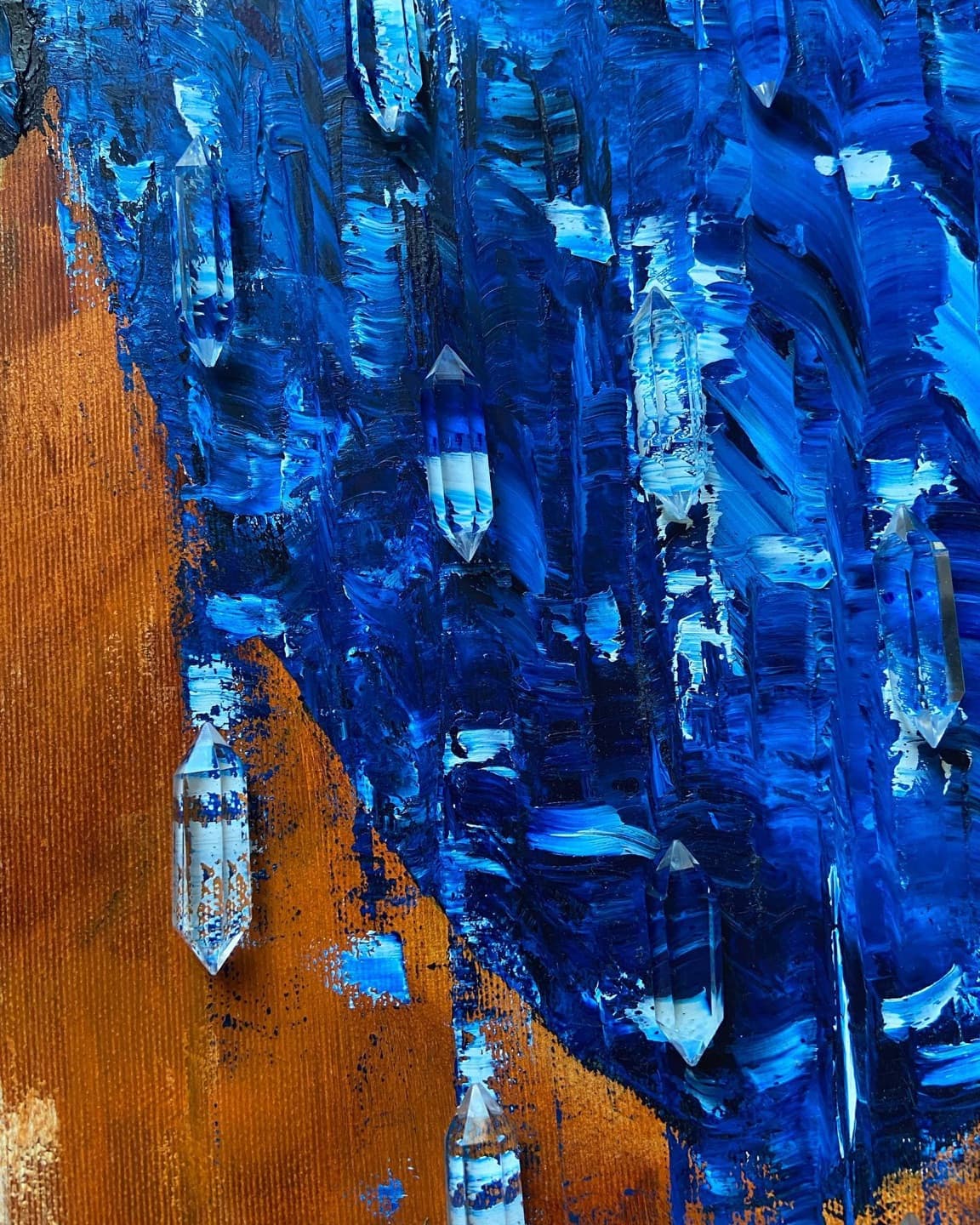
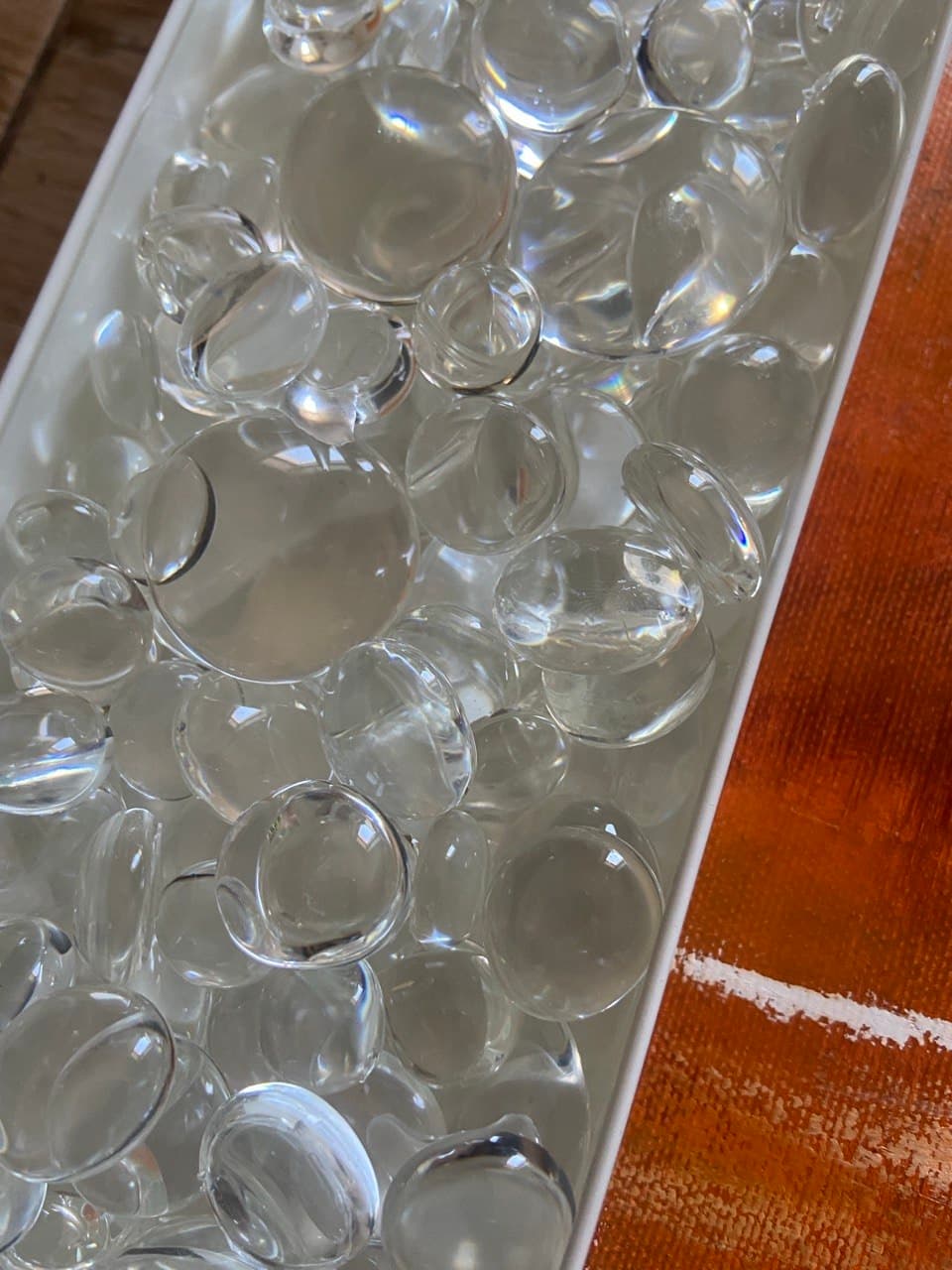
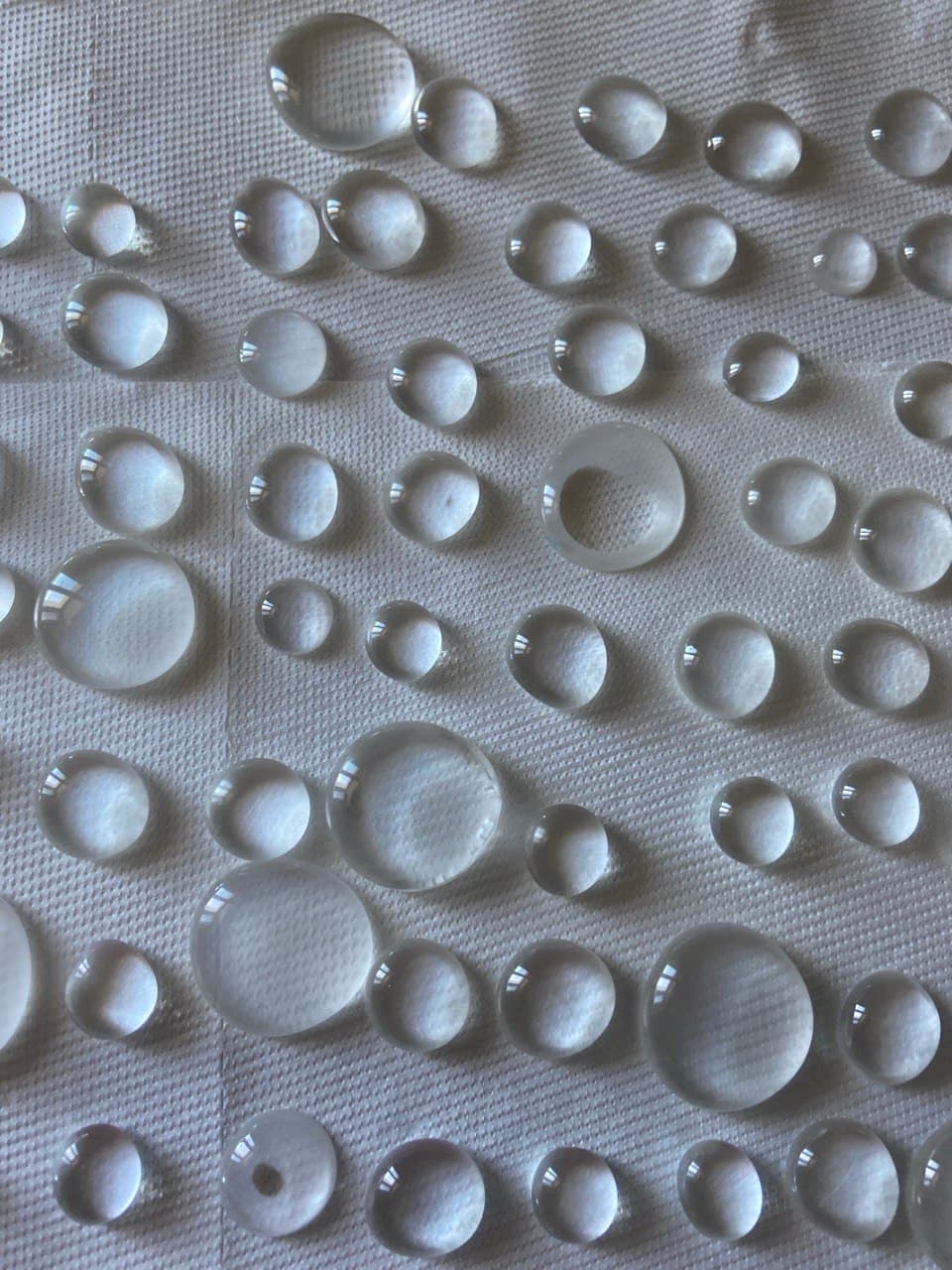
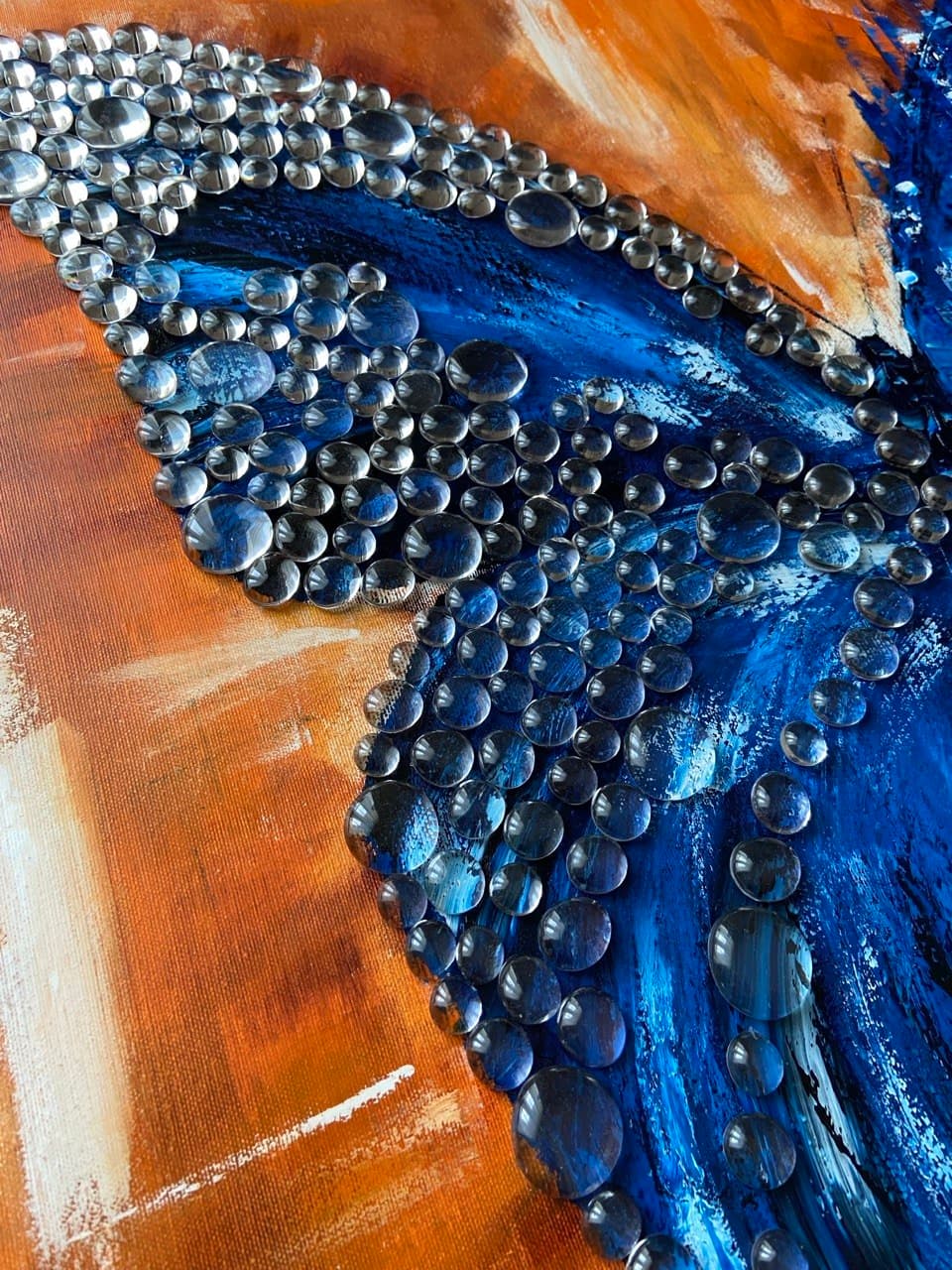
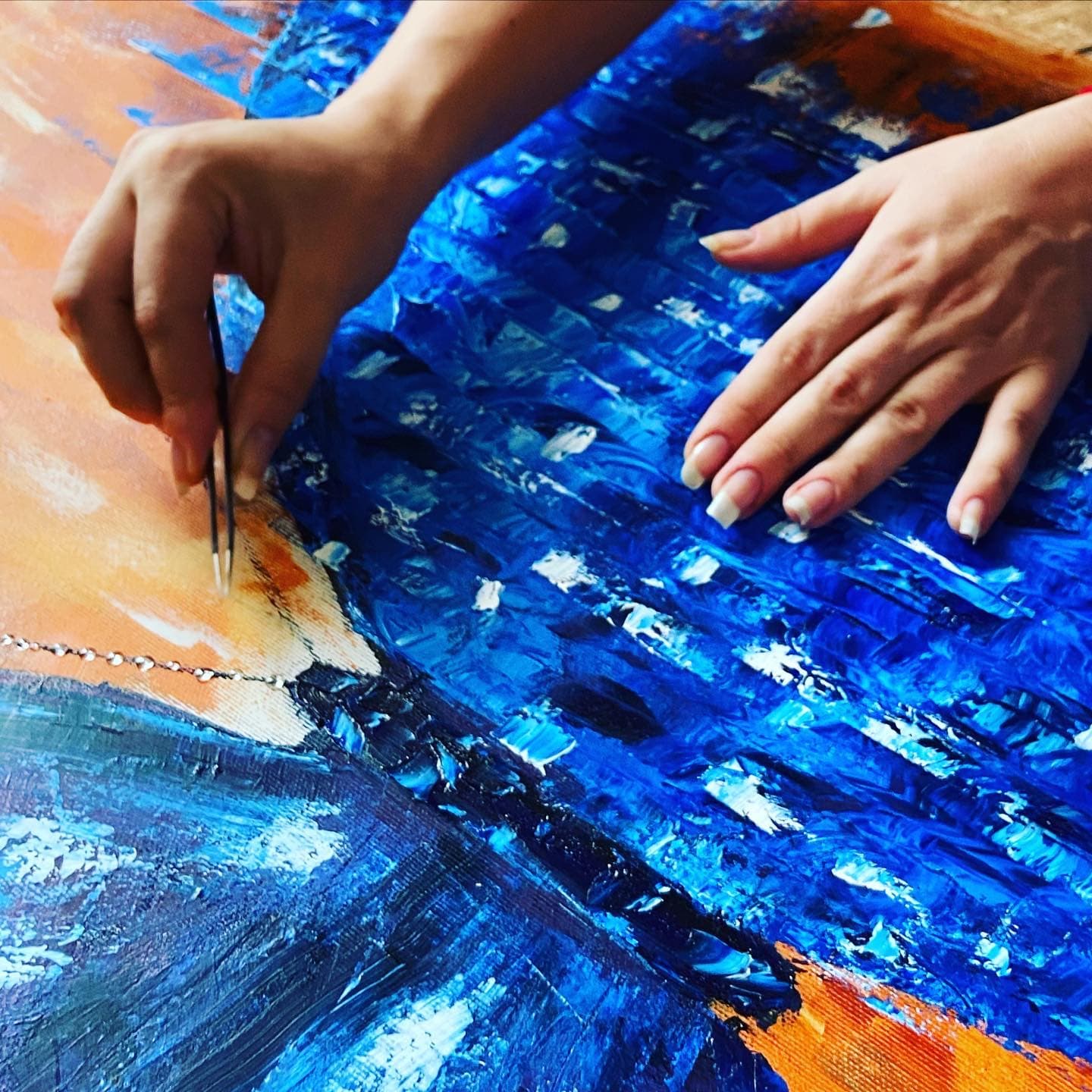
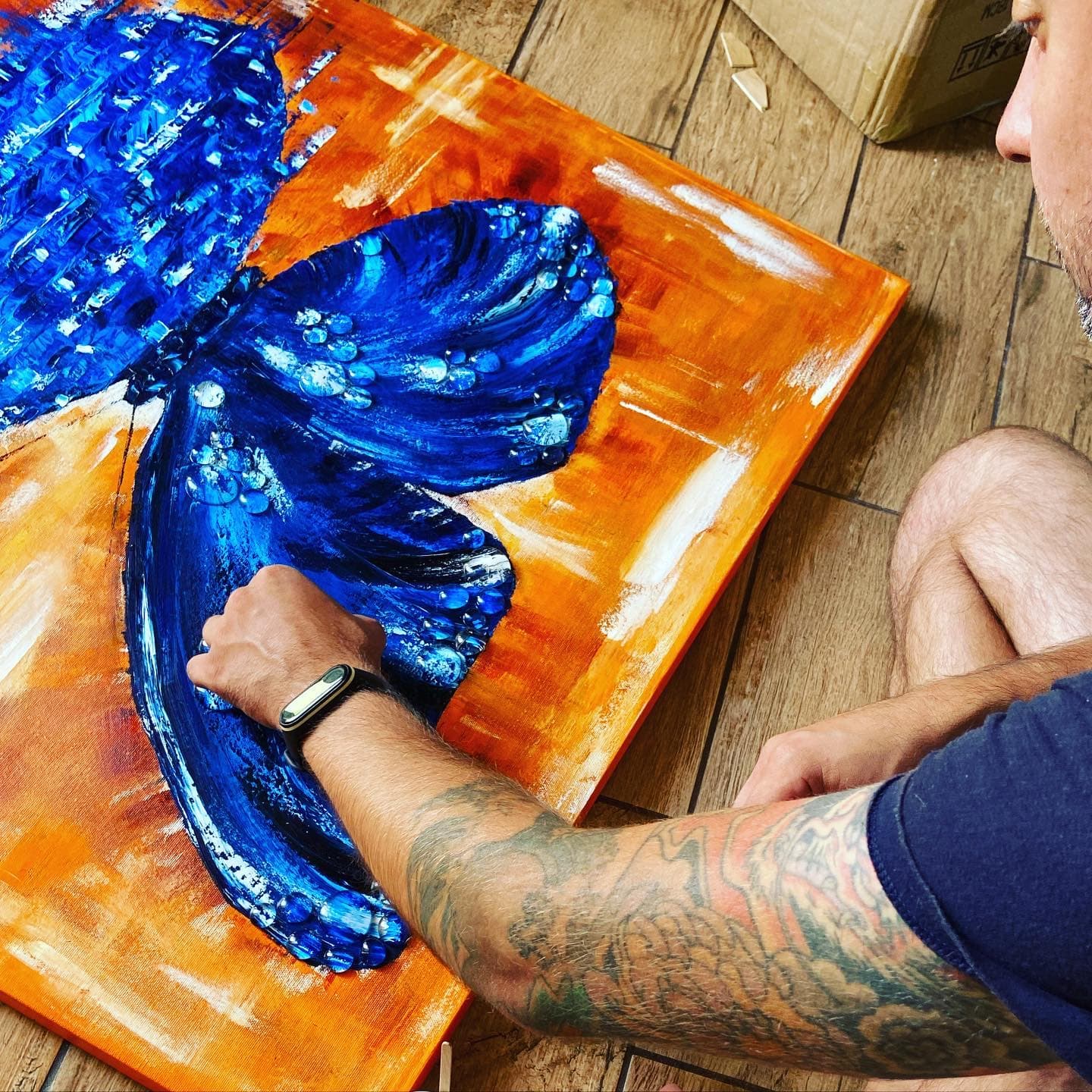
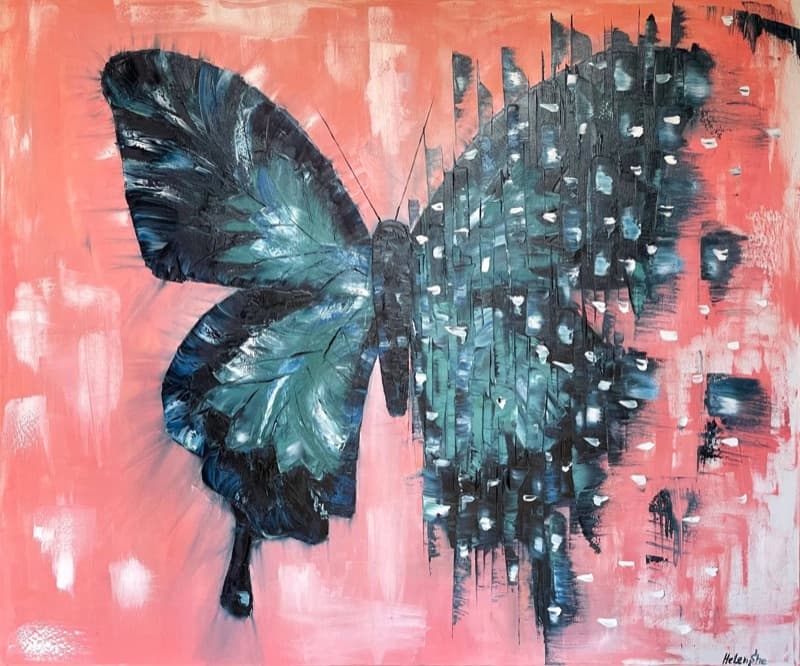
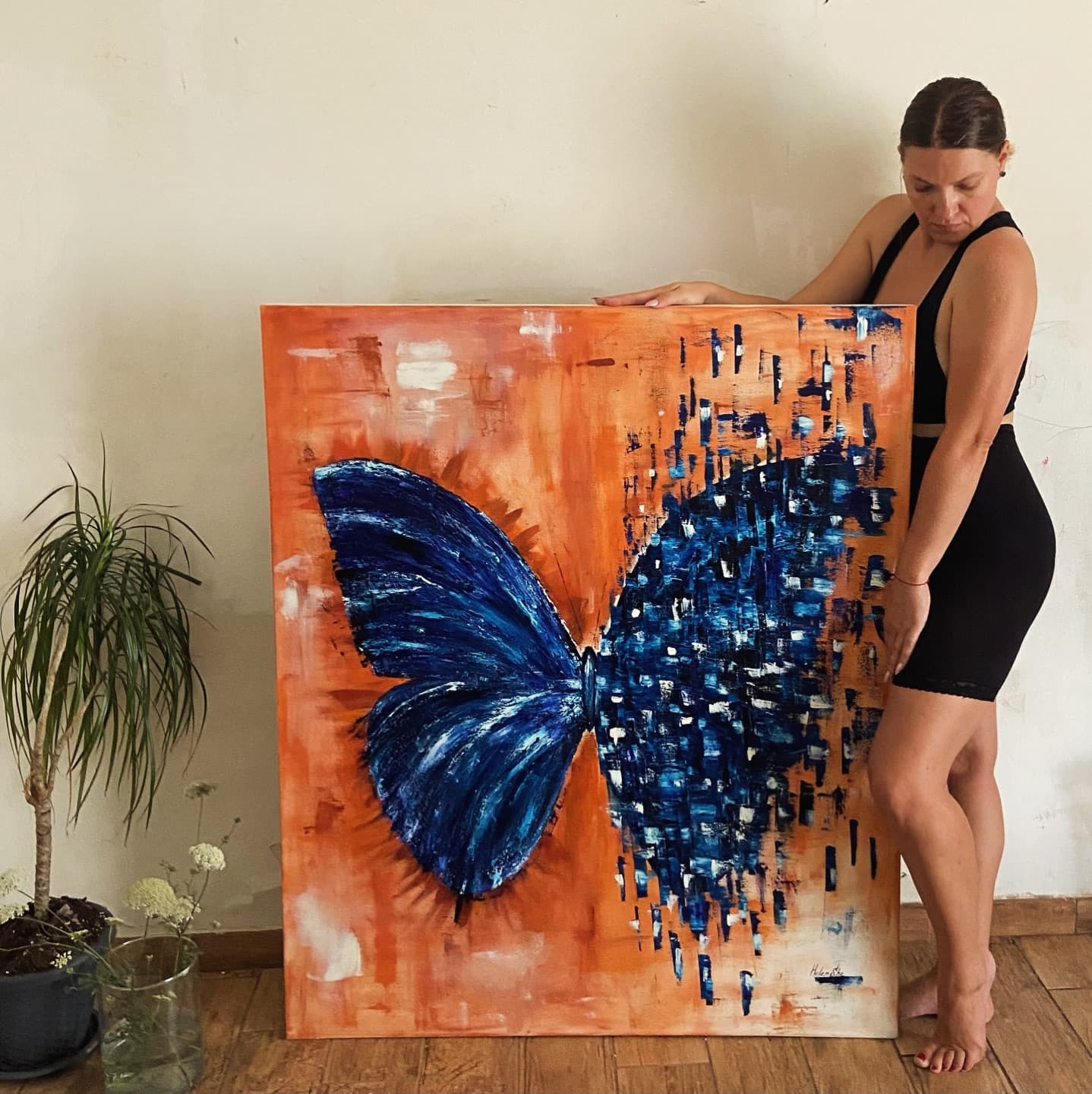
I painted the butterfly in oil on canvas: a deep blue figure on a warm orange ground, with the right wing built up in thick vertical strokes that read almost like a digital texture. Then came the part that took most of the three months the work required. Every drop on the left wing, around three hundred of them, and every crystal on the right wing was cast in epoxy resin, in silicone molds that my husband Boris and I made ourselves. Boris solved the technical side of the casting. The underside of every drop and every crystal then had to be polished by hand, and together we fixed each one to the canvas, one by one, with the same epoxy resin. No two drops are the same.
The two wings tell one story. The dew is the living world: fragile, temporary, perfect. The crystals are what that beauty becomes when it passes into the matrix, sharper and more structured, but still made of light. Beauty is fragile, yet it does not disappear. It changes form.
No AI was involved in making this work: everything you see was painted, cast, polished and placed by hand.
— Helen She
Process
From canvas to cast crystal
01 · Painting
Helen painted the butterfly in oil on canvas: a deep blue figure on a warm orange ground, the right wing built up in thick vertical strokes.
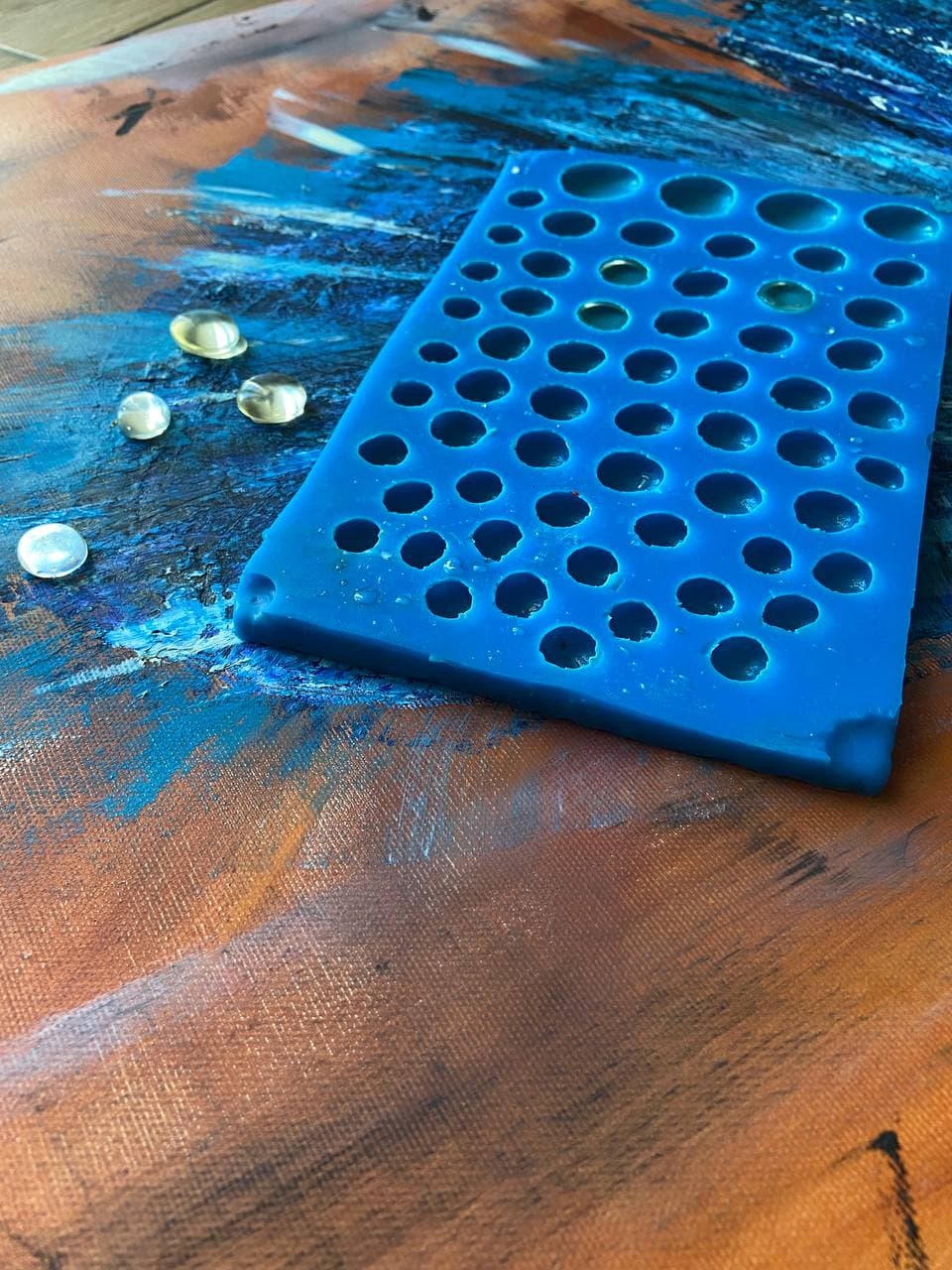
02 · Molds
Silicone molds for the drops and the crystals were made by hand, with Boris Shestakov working out the technical side.
03 · Casting
Every drop — around three hundred on the left wing — and every crystal on the right wing was cast in epoxy resin. No two drops are the same.
04 · Polishing
The underside of each drop and each crystal was polished by hand so it would sit on the painted surface.
05 · Setting
Helen and Boris fixed every element to the canvas, one by one, with the same epoxy resin.
Studio footage. The clips are silent.
The series
Butterfly Matrix, 2018–2026
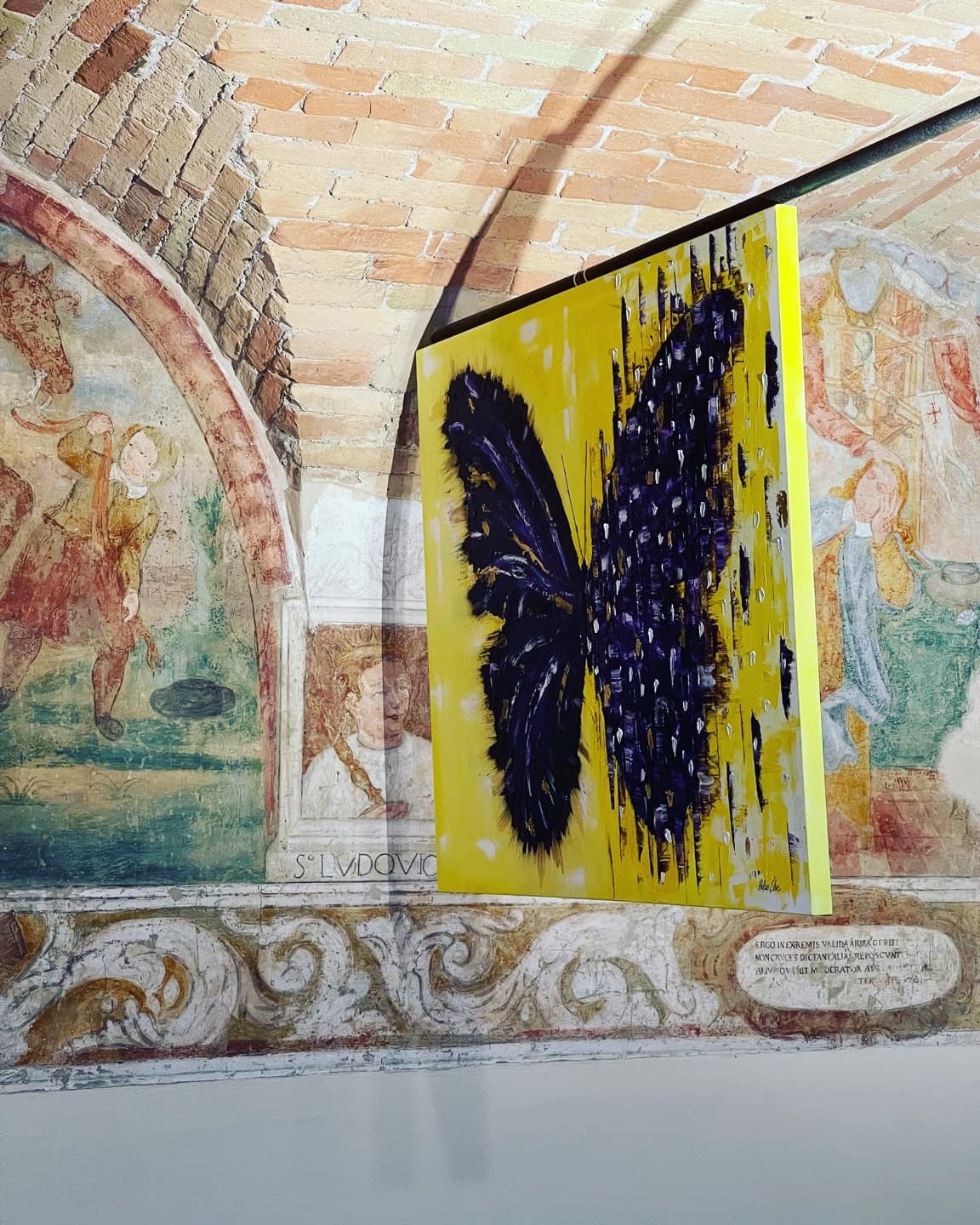
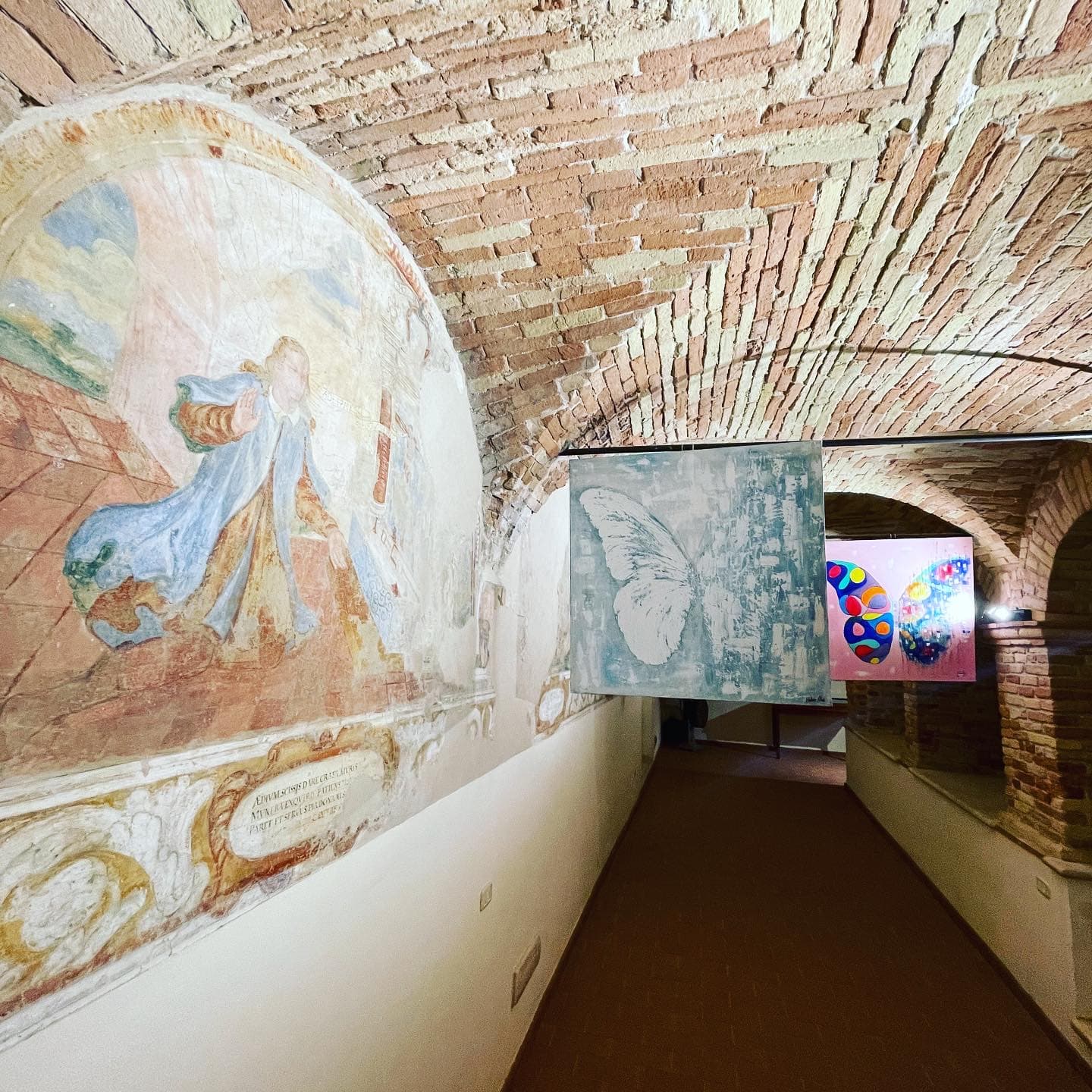
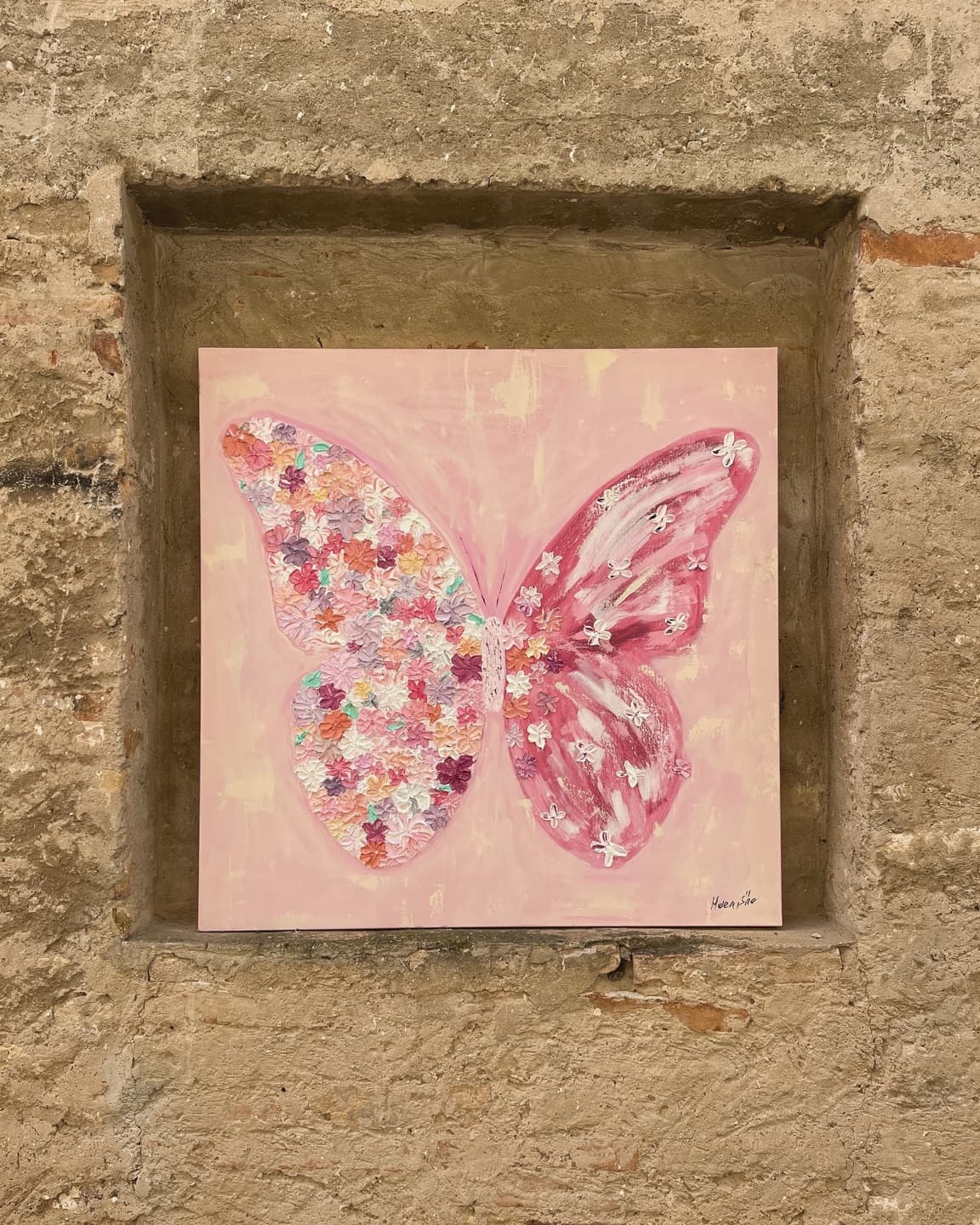
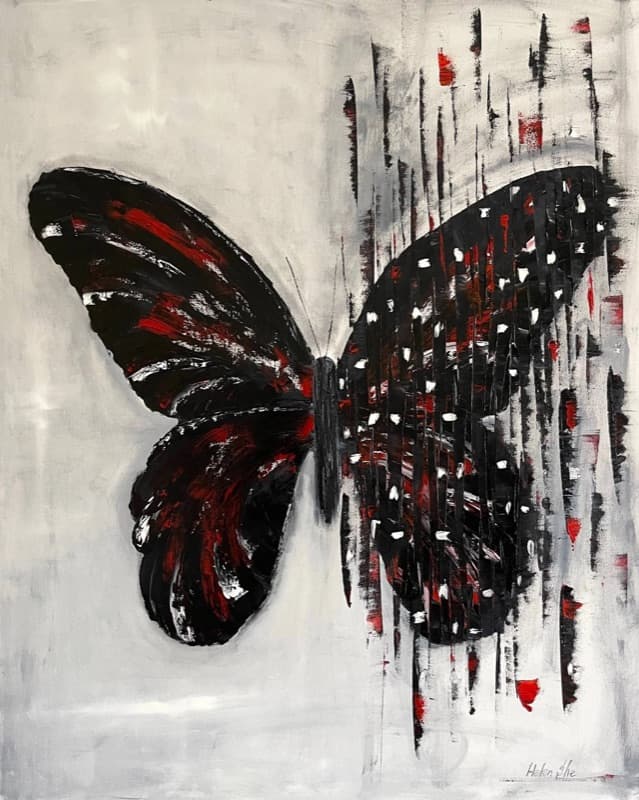
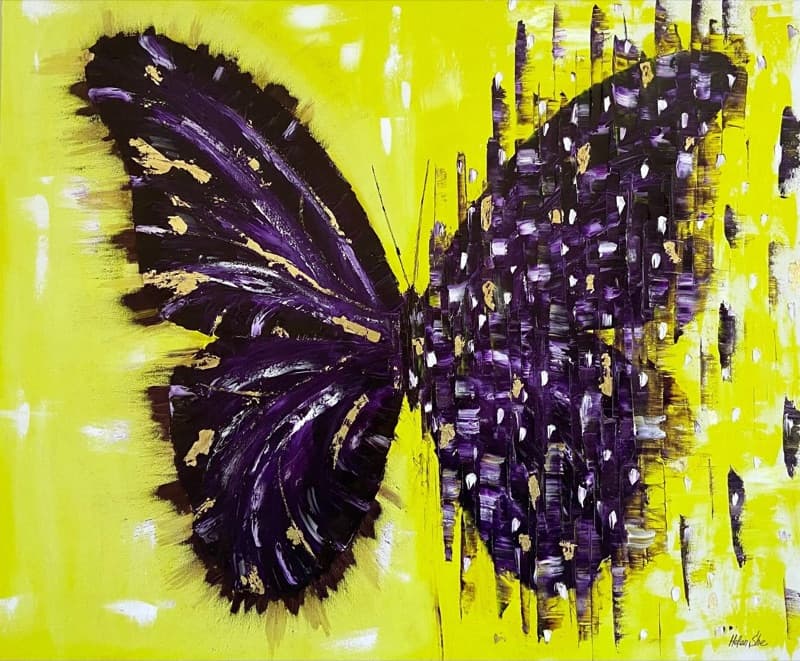
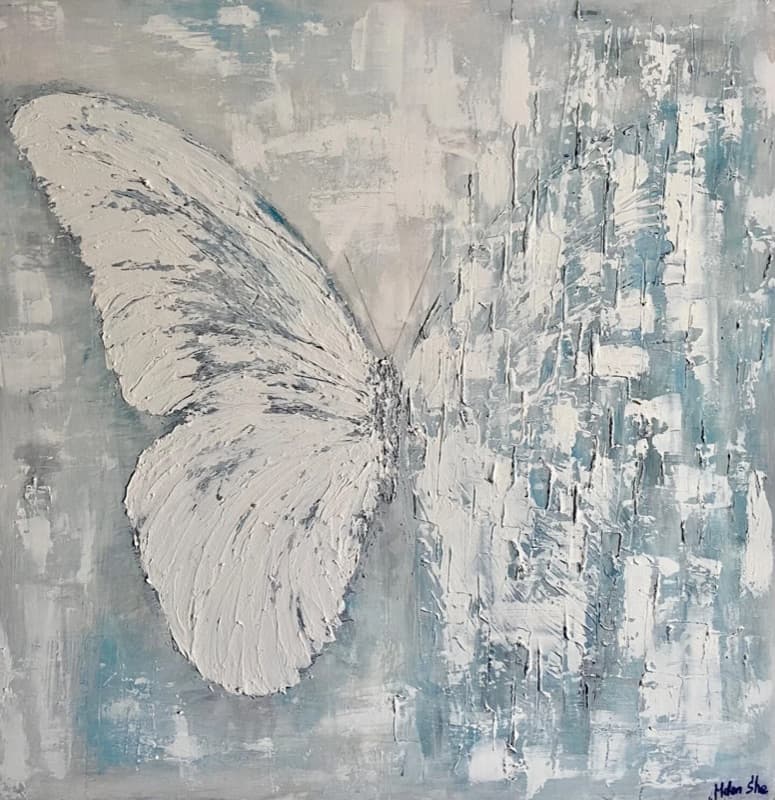
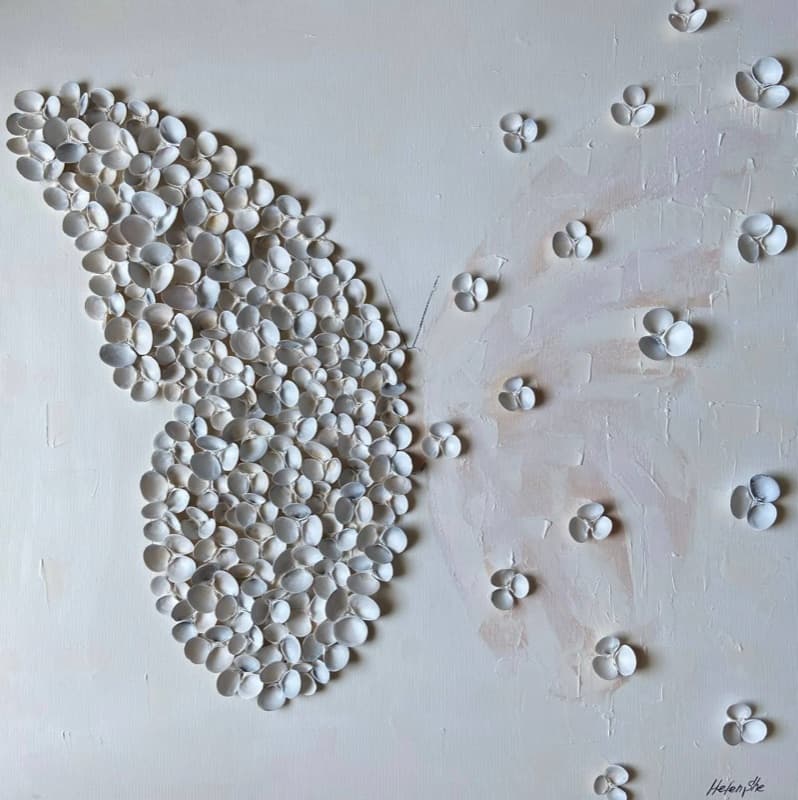
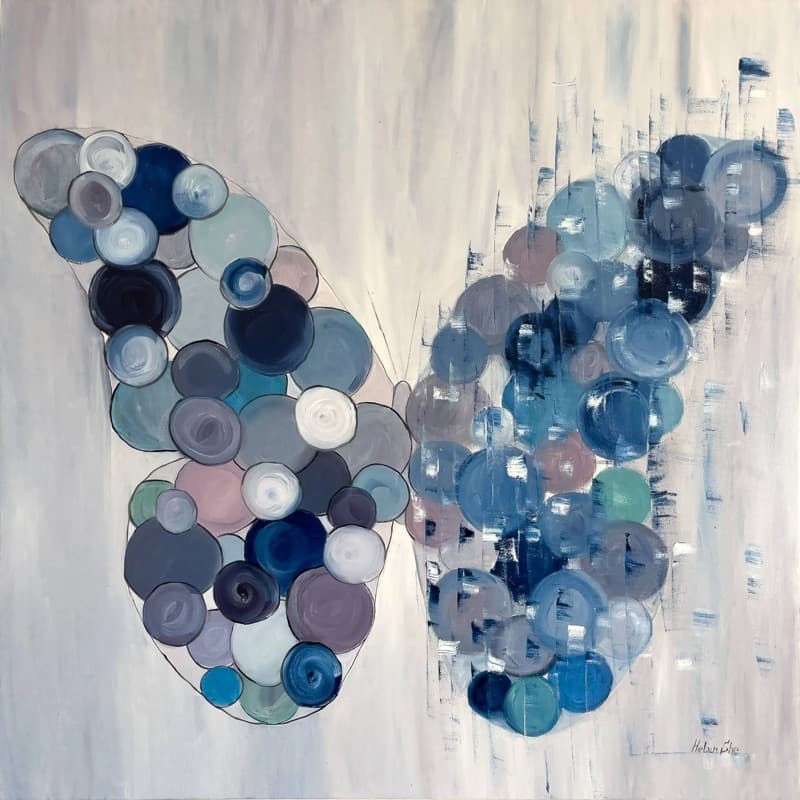
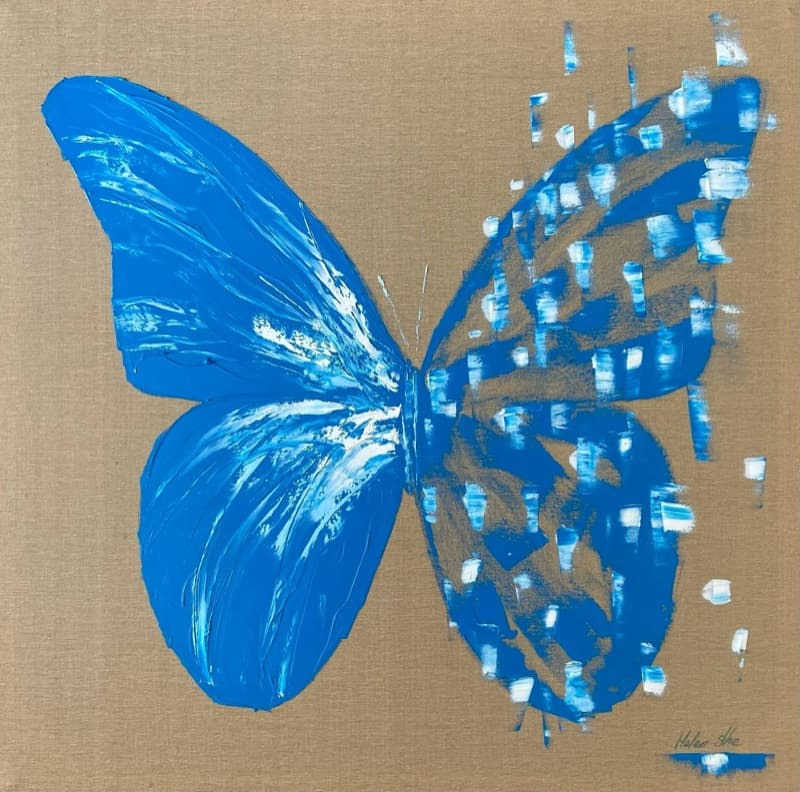
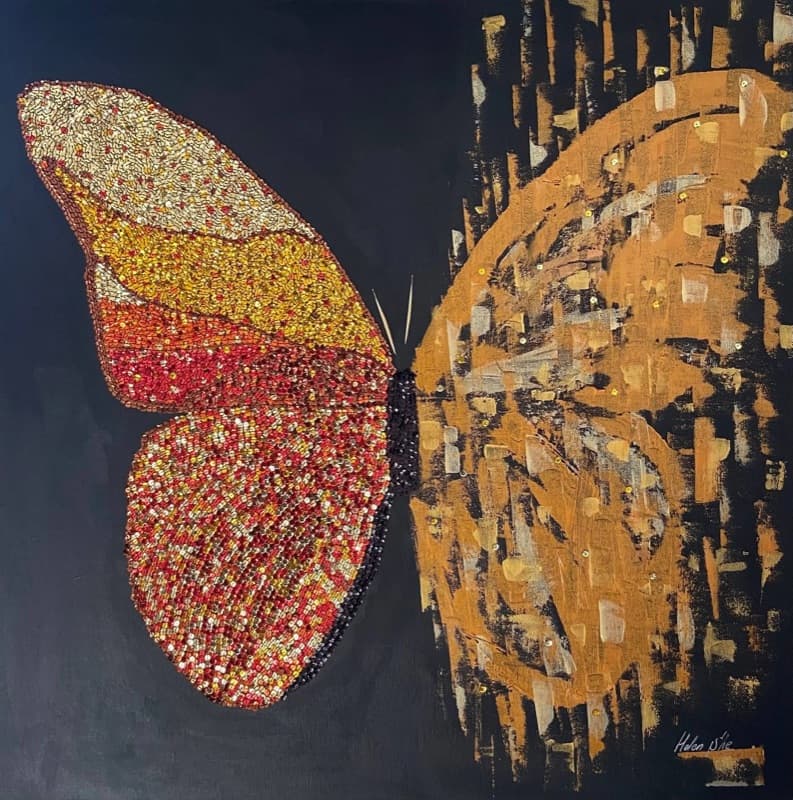
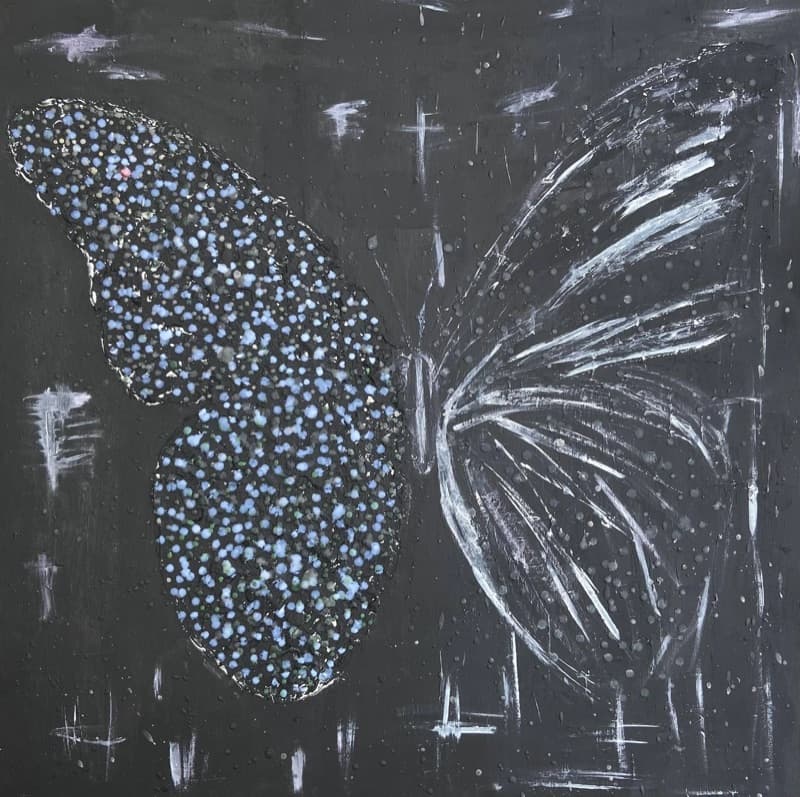
In most works of the series the butterfly is split between two states: one wing rooted in the living world, the other rebuilt as “the matrix” — the structured order through which we increasingly see nature. Over the years the matrix side has taken many forms: thick vertical strokes, folk ornament, stained glass, cast resin and, most recently, a grid of hand-painted pixels.
Some butterflies live only a few days. When I learned that, I felt surprise and sadness at once — something so beautiful, and so brief. If you don’t capture that moment, it is gone. That is how Butterfly Matrix began.
Sooner or later everything changes form. So one side of the butterfly is painted as nature made it, and the other as if it had passed into a new dimension, the matrix. Its essence and its beauty stay intact: they do not disappear, they melt into the matrix.
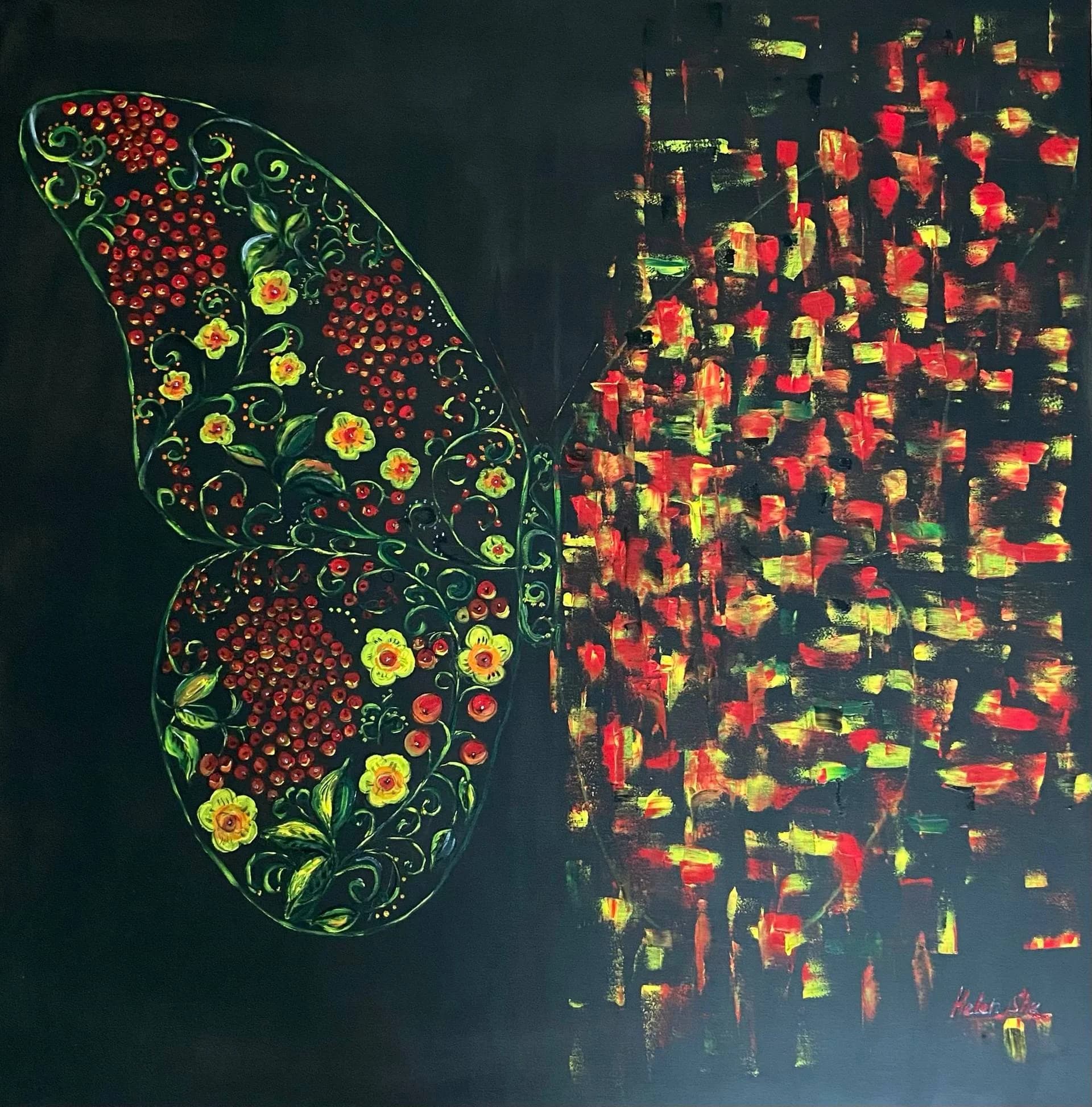
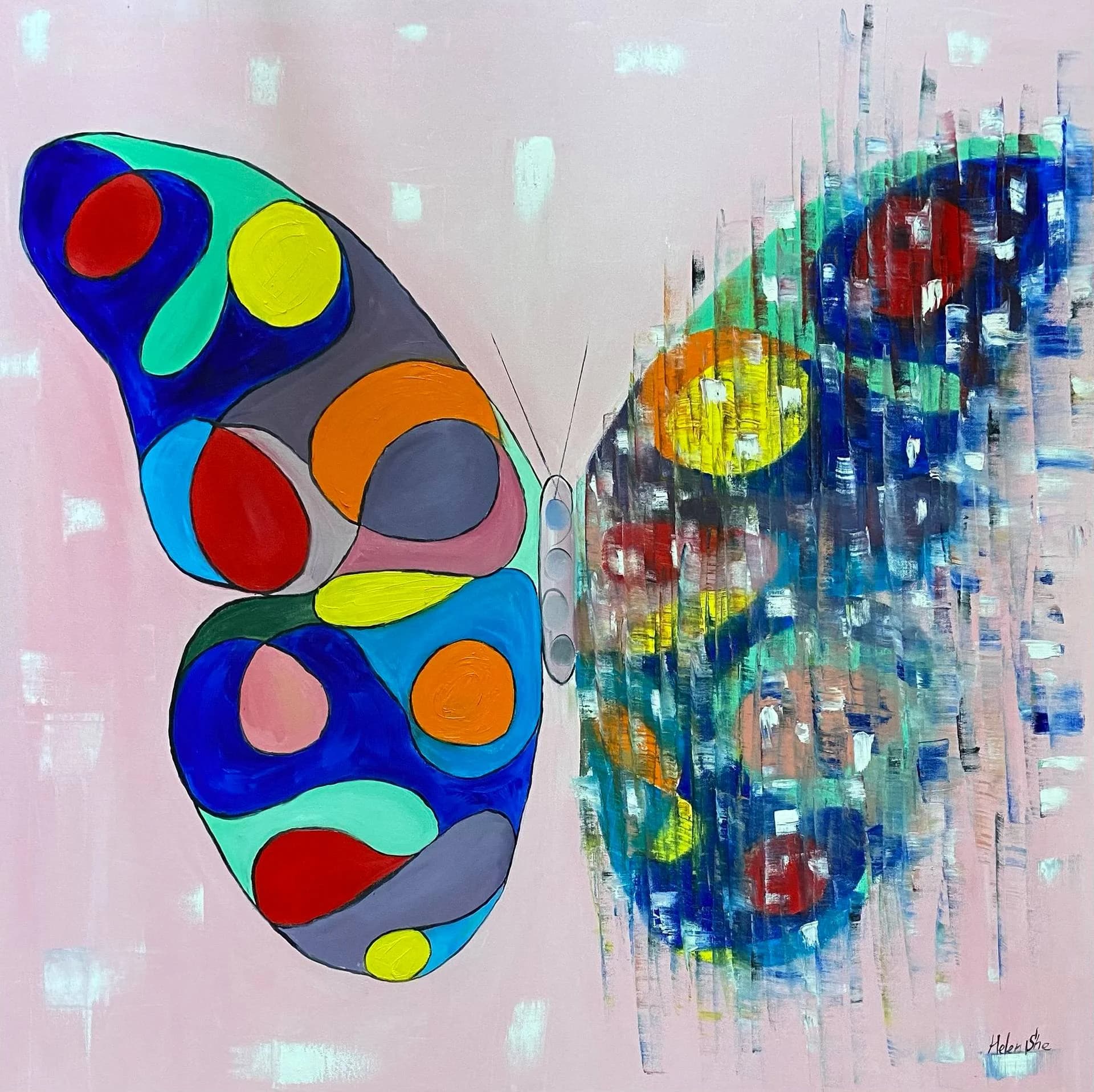
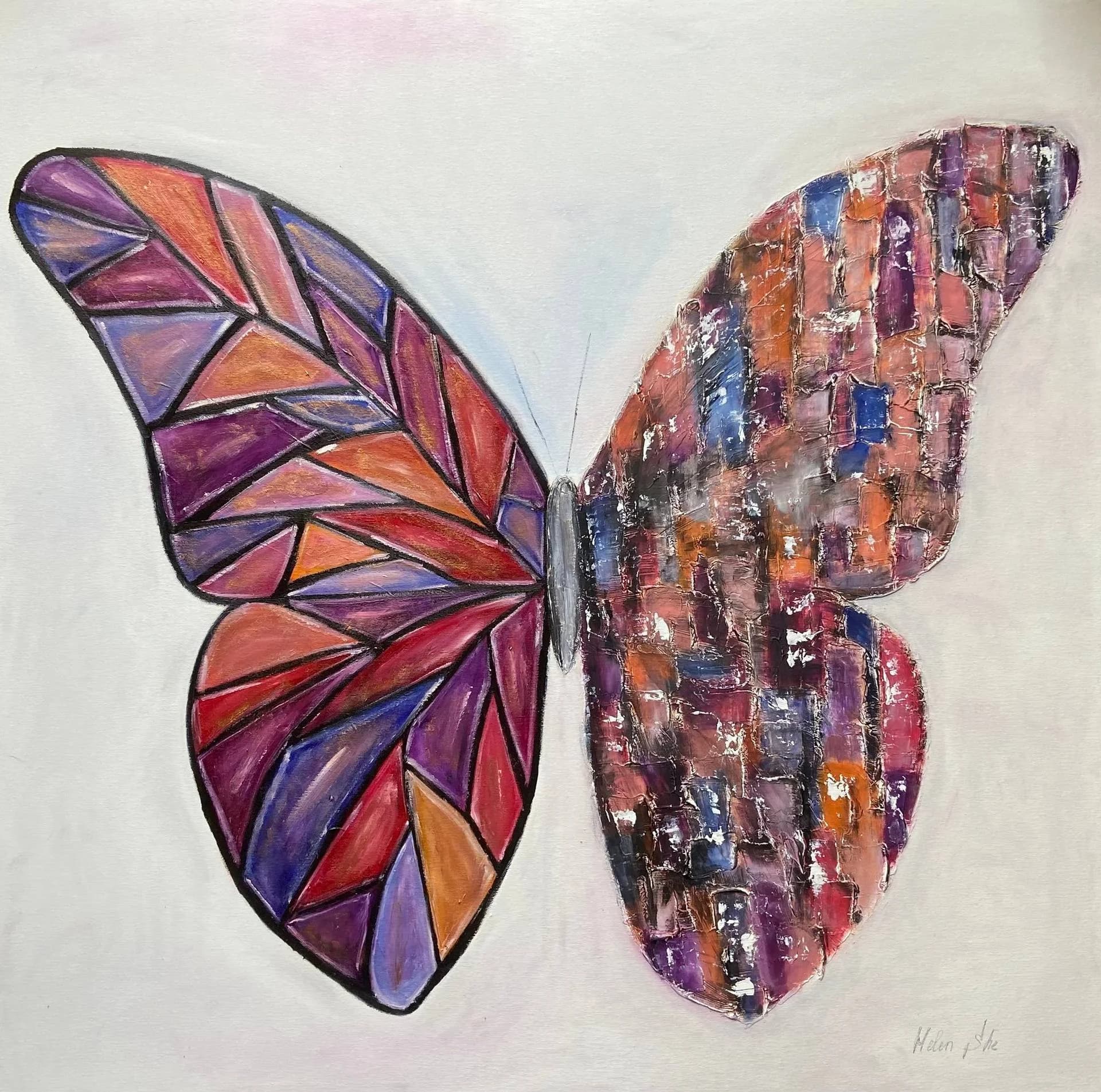
From crystal to pixel
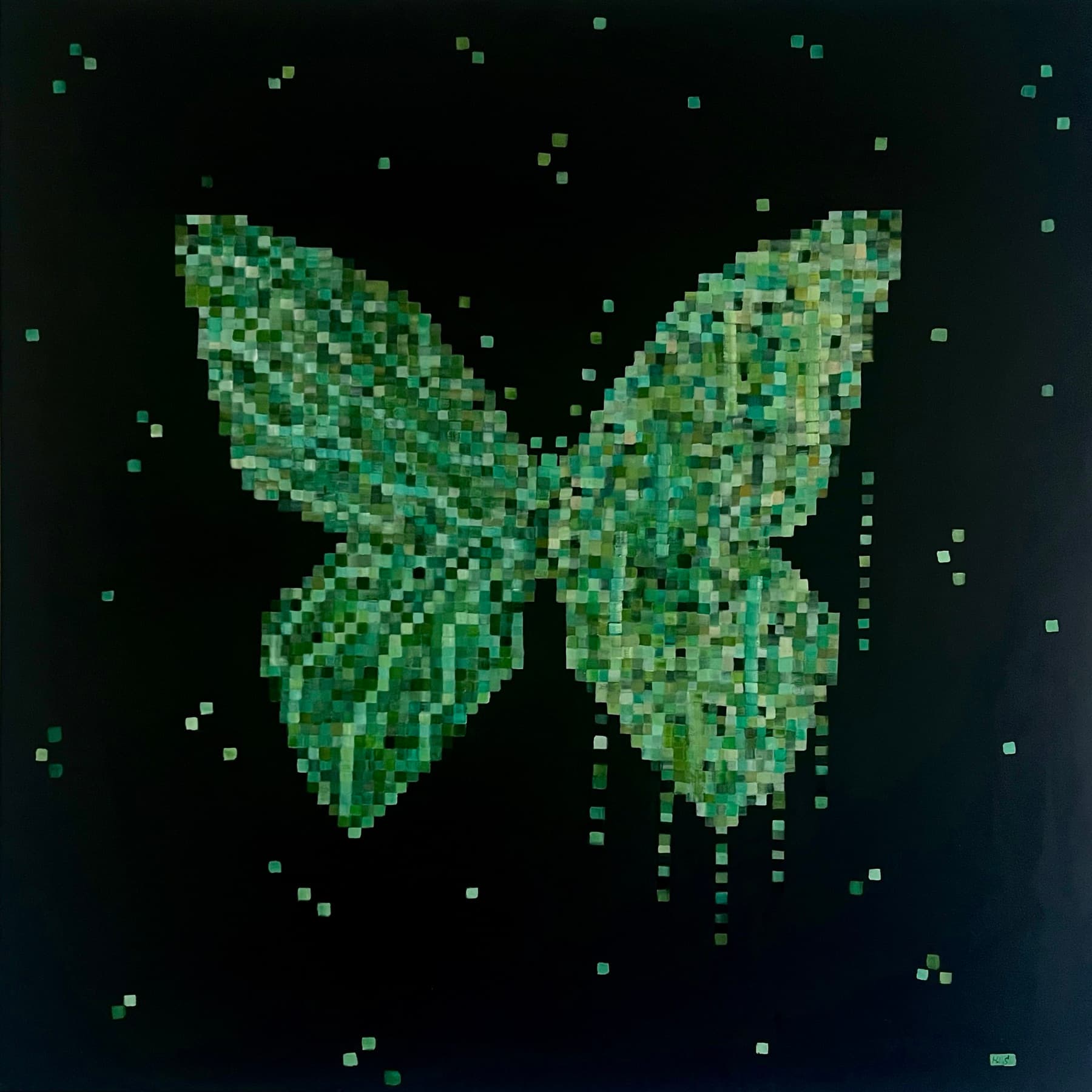
In Butterfly Matrix Pixel (2026) the matrix is no longer cast but painted — and this time it takes over both wings. The outline and grid were marked out by hand in pencil, and every square was then painted individually in oil directly onto the canvas, with no stencil, template or digital transfer.
The idea came from my children. They have been playing a video game whose whole world is built from blocks for many years, and one day they asked me a simple question: “Why are there no butterflies?” Butterflies have long been one of the recurring subjects in my art, and in my Matrix works I build images from hundreds of small geometric elements. So I decided to bring these two worlds together — and to answer their question in paint. I painted every square by hand, one at a time. That mattered to me: the painting looks digital, but nothing about how it was made is.
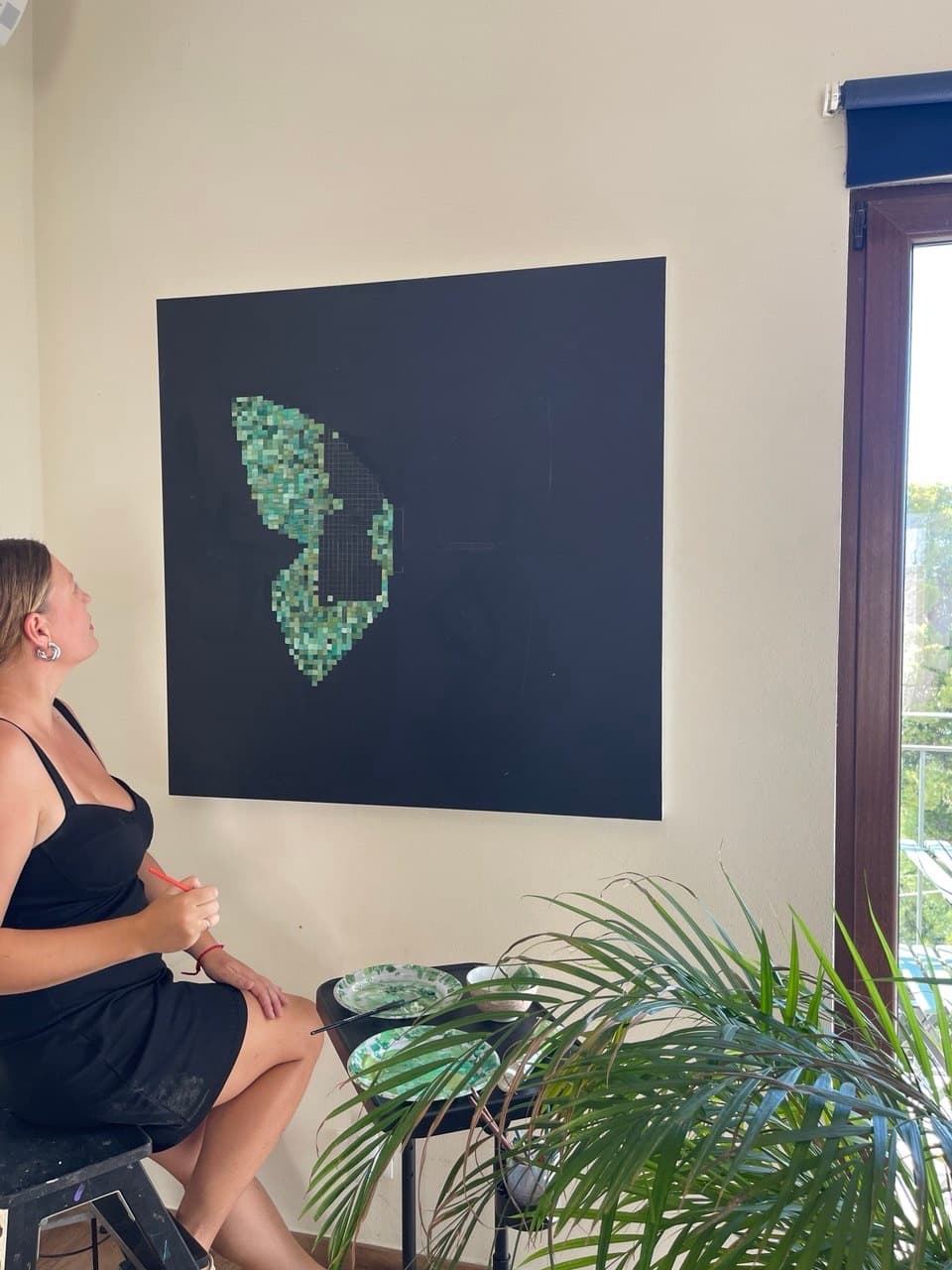
More from the series
A selection of further works, 2019–2025.
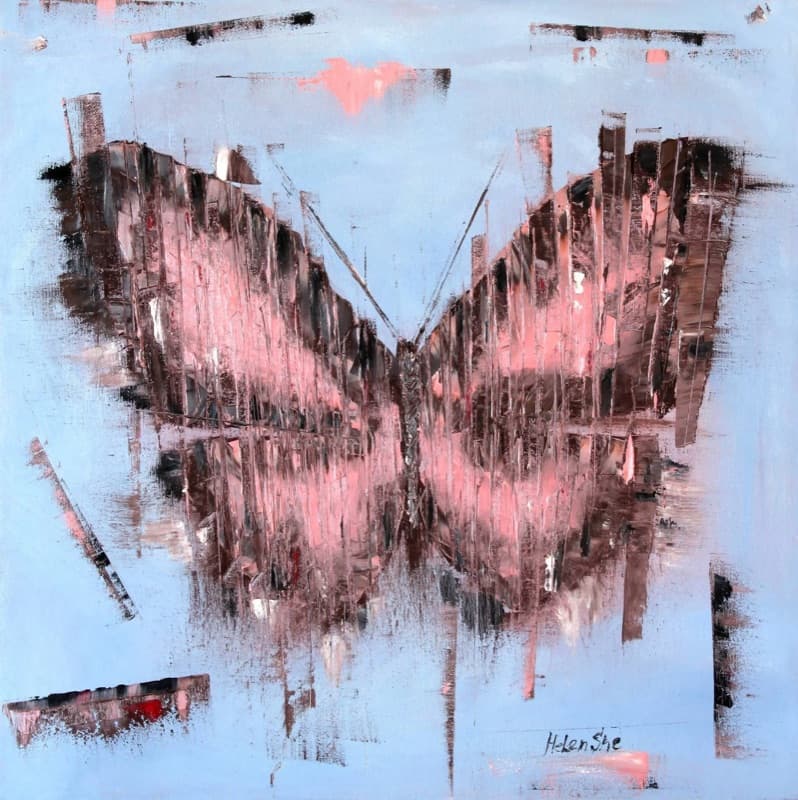
The artist
Helen She
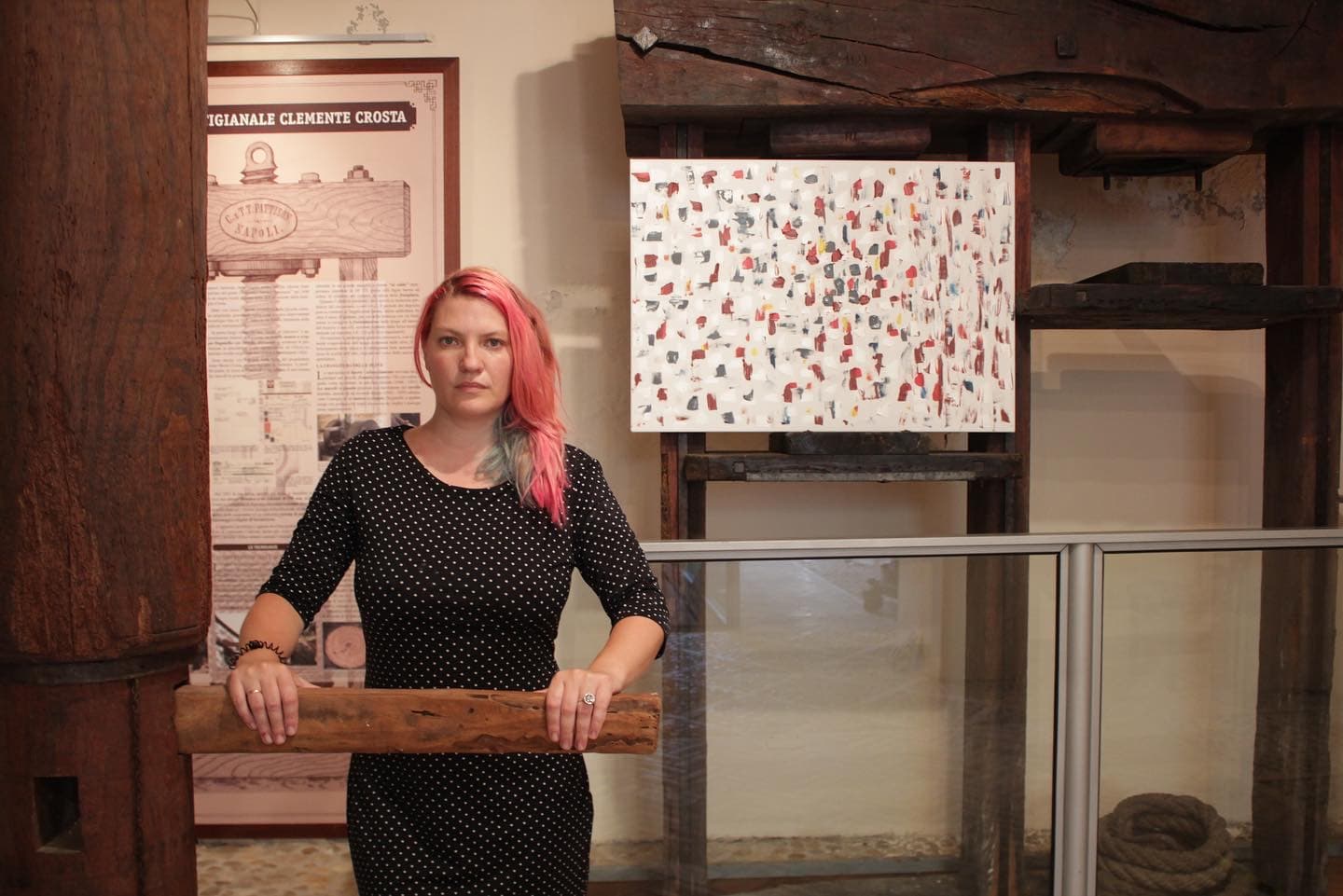
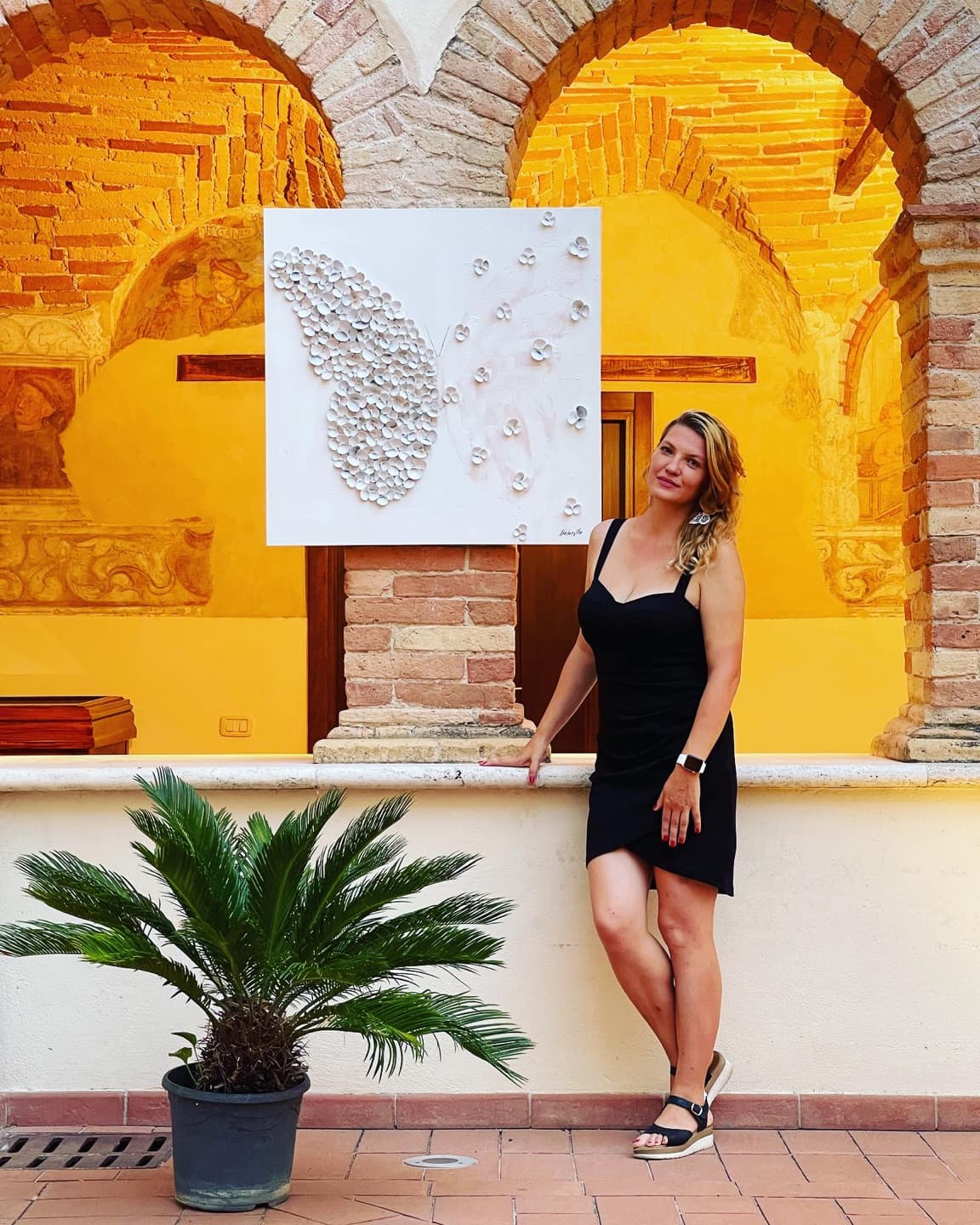
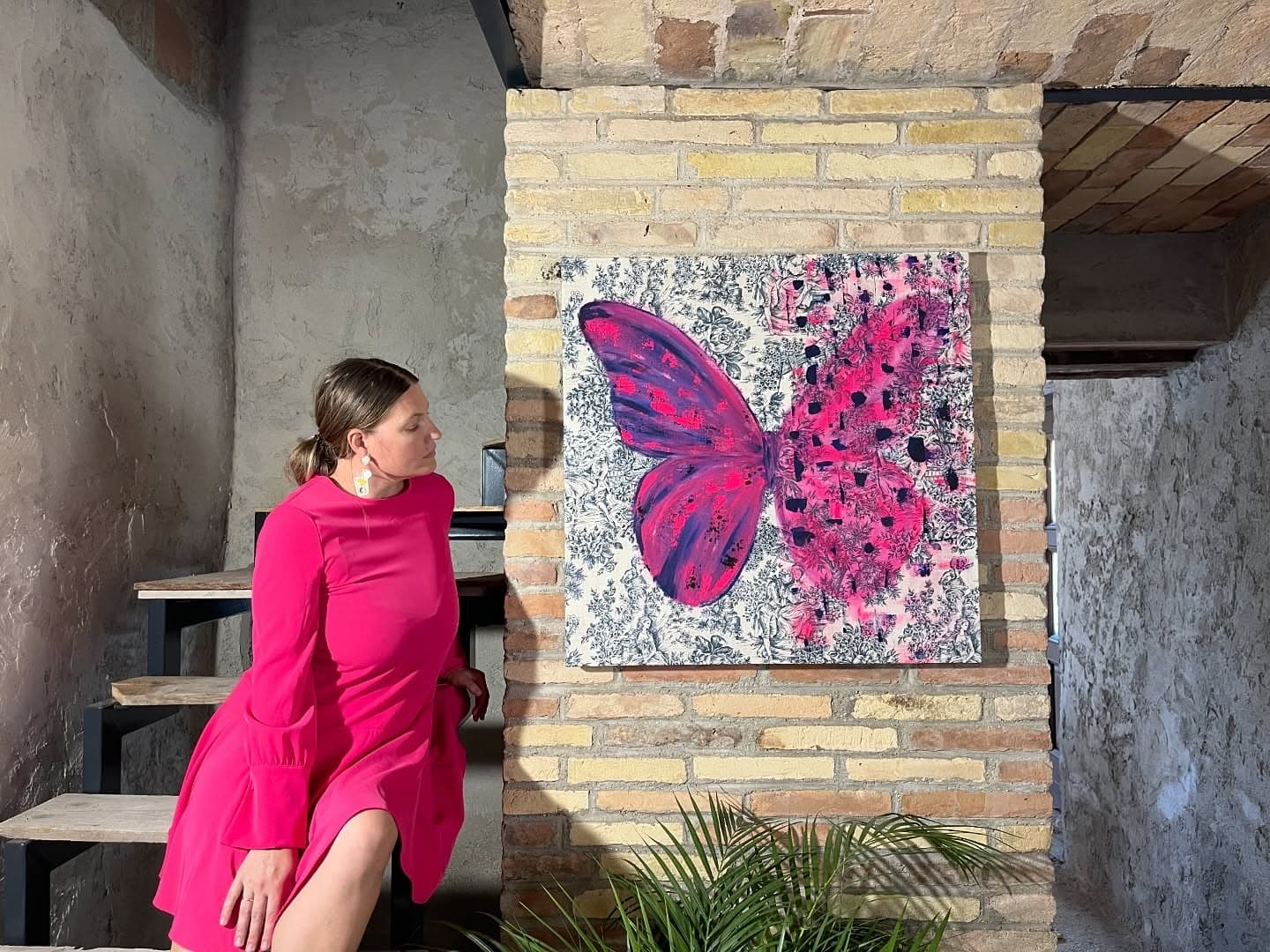
Helen She is a Russian-born painter who lives and works in Loreto Aprutino, in Italy’s Abruzzo region.
She grew up in a small provincial town and, as a child, dreamed of becoming a fashion designer. Convinced she could not draw, she took another path: she moved to Moscow on her own, studied journalism and then public relations, and spent nine years building a life far from the studio.
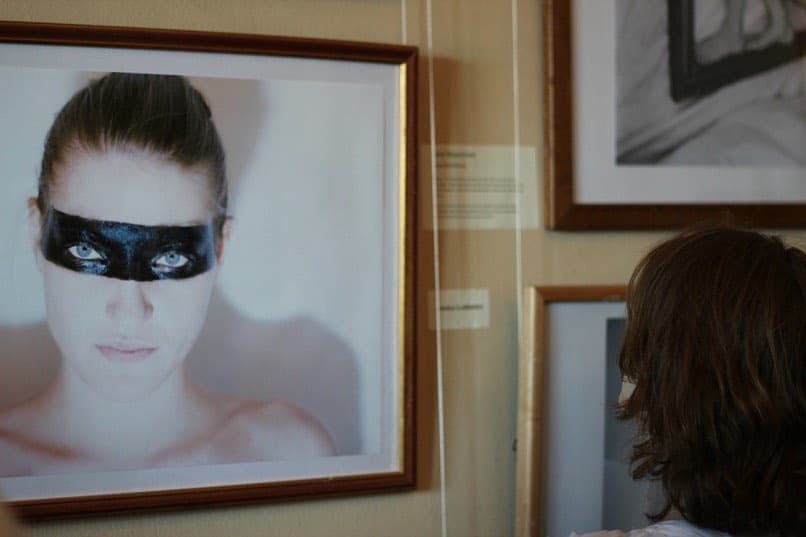
Art came to her through her husband, Boris Shestakov. The couple met near the State Hermitage Museum in St. Petersburg, and in 2015 a photographic work they conceived together, in which Helen also appears, was shown at the Hermitage: her first exhibition, before she had ever painted. When she told him she had never been able to draw, he answered that drawing is only a skill; what fills a painting is lived experience. In 2016 she finished her first oil painting.
Self-taught, she developed a “pixel style”: images built from small hand-painted blocks, with no more than three or four colors on a canvas. Its fullest expression is Butterfly Matrix, a series of around forty works in which the living form of a butterfly meets the grid of “the matrix”, made in oil, acrylic and hand-cast resin. Boris remains her closest supporter and collaborator, working alongside her on the technical side of her mixed-media pieces.
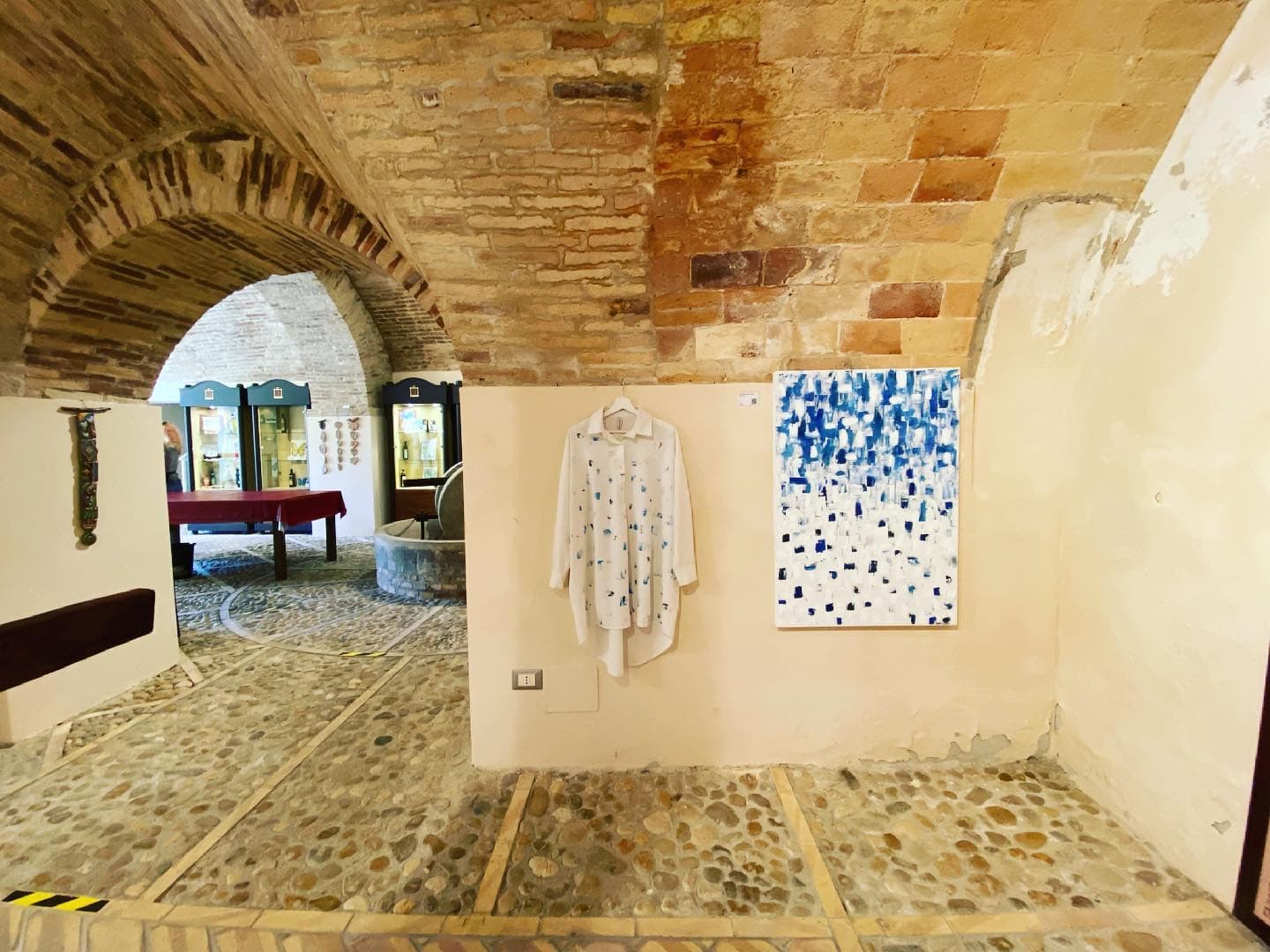
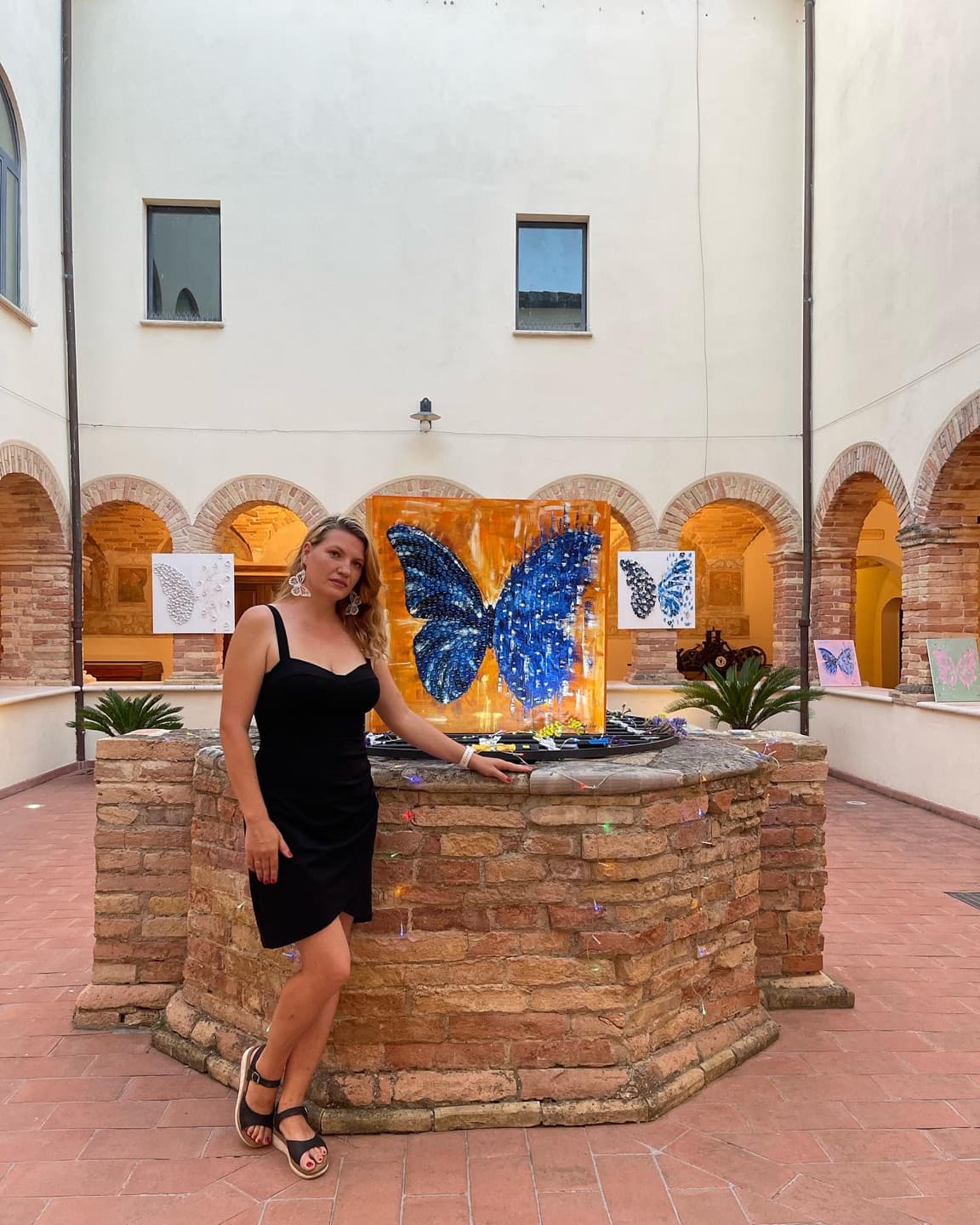
Since the family moved to Italy in 2020, she has held a solo exhibition in a museum space in Loreto Aprutino (2021), presented Butterfly Matrix at Tenuta del Priore and in a historic convent in Collecorvino as part of the town’s cultural program (2023), and shown work in Tokyo (2023). Her paintings are in private collections in the United States, France, Germany and Mexico. In 2023 she founded Gallery Helen She.
Exhibitions
Selected exhibitions
- 2025Art in BloomLoreto Aprutino, Italy — paintings shown on the historic walls of the town, spring
- 2023Group showing, TokyoTokyo, Japan — two works exhibited in a restaurant venue, further works shown on digital screens
- 2023Butterfly MatrixHistoric convent, Collecorvino, Italy — part of the cultural program of the Comune di Collecorvino, 20–24 July
- 2023Butterfly MatrixTenuta del Priore, Collecorvino, Italy
- 2021Solo exhibitionMuseum space, Loreto Aprutino, Italy, 25 June – 4 July
- 2015State Hermitage MuseumSt. Petersburg — a photographic work co-conceived by Helen She and Boris Shestakov, in which she also appears; her first exhibition